

Composite vs. Wood Decking in Pennsylvania: 5 Things to Know Before You Choose
You've got big plans for your backyard. A deck, with comfortable seating to enjoy the summer sun, a fire pit for chilly evenings, and a grill, smoker, or even an outdoor kitchen setup so you can enjoy every moment outdoors in the fresh air, because you've worked so hard for your family. So go ahead, build that deck-you deserve it!
But when it comes to building a deck in Pennsylvania, there's that one question that stumps every future deck owner:
What material do you actually build the deck with?
You have composite or wood. And they're two very different answers with two very different long-term experiences.
And Pennsylvania's weather, with its hot summers, brutal winters, freeze-thaw cycles, and plenty of moisture (sometimes all at once), makes the choice matter more than it would in, say, Arizona.
Here at Keystone Custom Decks, we've been building decks across Lancaster County and beyond for over 40 years. We've seen both materials perform in the real world, and we've also seen homeowners regret choices they made based on price and material.
So before you say "yes" to that deck, check out our guide to help you make the right call for your home, budget, and lifestyle.







TL;DR - Composite vs. Wood Decking in Pennsylvania
- Upfront vs. Long-Term Cost: Wood is cheaper to install initially, but composite often costs less over 20 years when factoring in maintenance expenses.
- Maintenance Demands: Wood requires staining/sealing every 2-3 years to prevent rot, while composite only needs occasional soap-and-water cleaning.
- Climate Durability: Composite better resists Pennsylvania's brutal freeze-thaw cycles and humidity that cause wood to warp, crack, and split.
- Lifespan: Pressure-treated wood typically lasts 10-15 years, whereas high-quality composite offers a 25-year to lifetime warranty.
- Aesthetics: Wood provides a classic, natural feel, but modern composite mimics wood grain effectively and maintains its color without graying.
How Pennsylvania's Climate Affects Your Decking Choice
Pennsylvania isn't easy on outdoor structures. Between Lancaster County and the rest of the state, you have to deal with:
- Hot, humid summers with temperatures regularly hitting the upper 80s and 90s
- Cold winters with average lows in the 20s and heavy snowfall in many regions
- Freeze-thaw cycles that expand and contract materials repeatedly throughout winter and spring
- Spring rain and moisture that soaks into porous surfaces
And here's why this is something you should be concerned about:
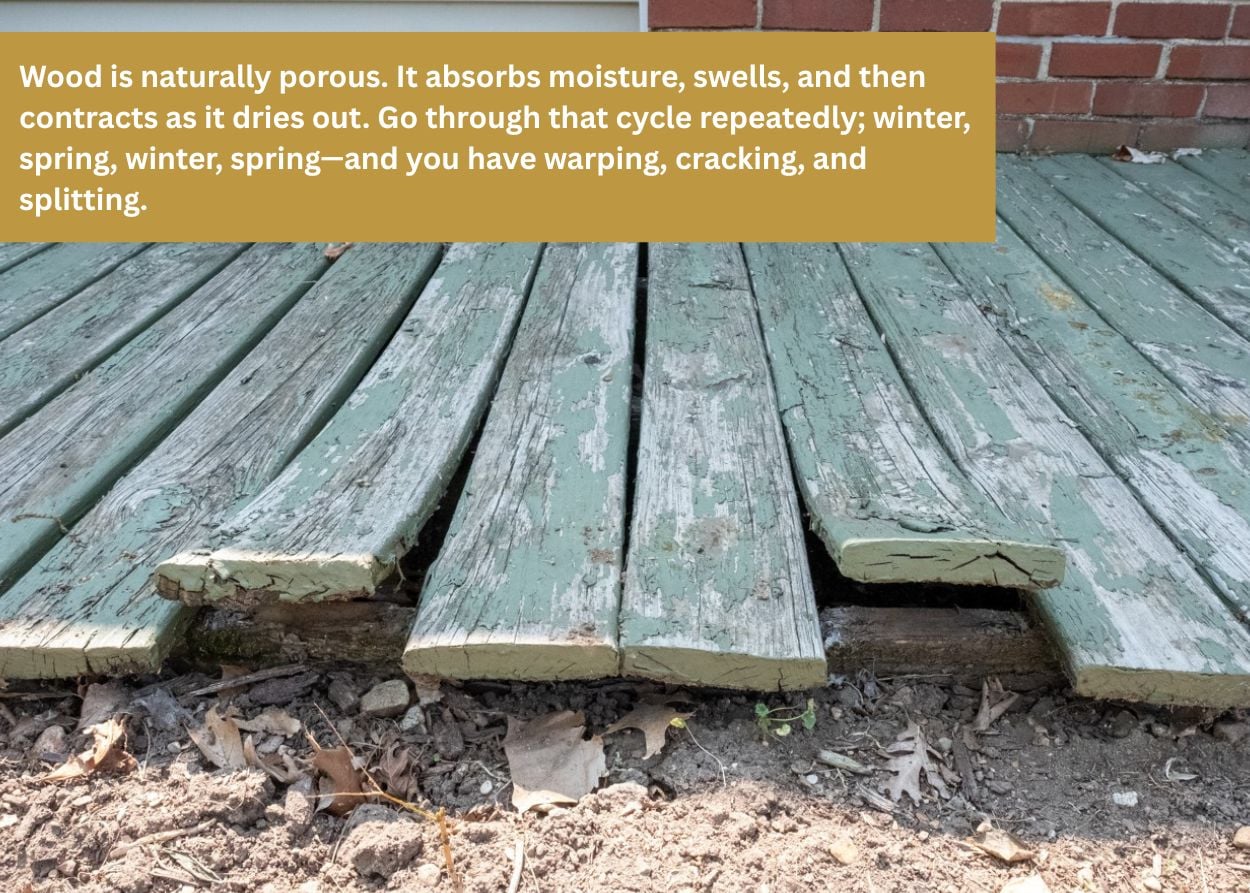
Wood is naturally porous. It absorbs moisture, swells, and then contracts as it dries out. Go through that cycle repeatedly; winter, spring, winter, spring-and you have warping, cracking, and splitting. Untreated wood also invites rot and insect damage, which is a real concern in Pennsylvania's humid summers. According to the USDA Forest Service, wood decay fungi thrive in temperatures between 70°F and 90°F with high moisture, which pretty well describes a Pennsylvania spring or summer.
Composite decking handles moisture differently. Most composite products are made from a blend of wood fiber and recycled plastic. That plastic component repels moisture rather than absorbing it. High-quality composite boards-like those from Trex or TimberTech-are engineered to resist the swelling and cracking that Pennsylvania winters cause.
The bottom line is that Pennsylvania's climate puts real stress on decking. The material you choose needs to hold up against it-not just look good on day one.
Upfront Cost vs. Long-Term Cost: What You're Really Spending
This is where many homeowners make a mistake. They look at the price tag of wood and say, "That'll do."
But there's more to just the price you should be looking at.
Wood Decking Costs
Pressure-treated lumber-specifically, pine- is the most common wood decking choice in Pennsylvania, and it typically runs $2-$5 per linear foot for the material alone, as of 2024. With labor, you're generally looking at $15-$25 per square foot for a completely installed deck.
But if you want a nicer-looking deck, higher-end hardwoods are available for a higher premium. More on that later.
Composite Decking Costs
Composite typically costs more upfront. Materials run $4-$13 per linear foot, depending on the brand and product line, with total installed costs often landing between $25-$45 per square foot
On a 400-square-foot deck, it's a significant price difference.
But Here's the Catch
Wood requires ongoing maintenance that adds over time:
- Staining or sealing every 2-3 years: $200-$800+, depending on deck size and whether you DIY or hire out. This is the critical piece that is key to maintaining your wood deck.
- Board replacements as warping and rot occur over time
- Structural repairs if water damage reaches the framing
Composite requires almost none of that. Most manufacturers offer warranties ranging from 25 years to lifetime on their products, so you're essentially paying more upfront to avoid a long string of future expenses.
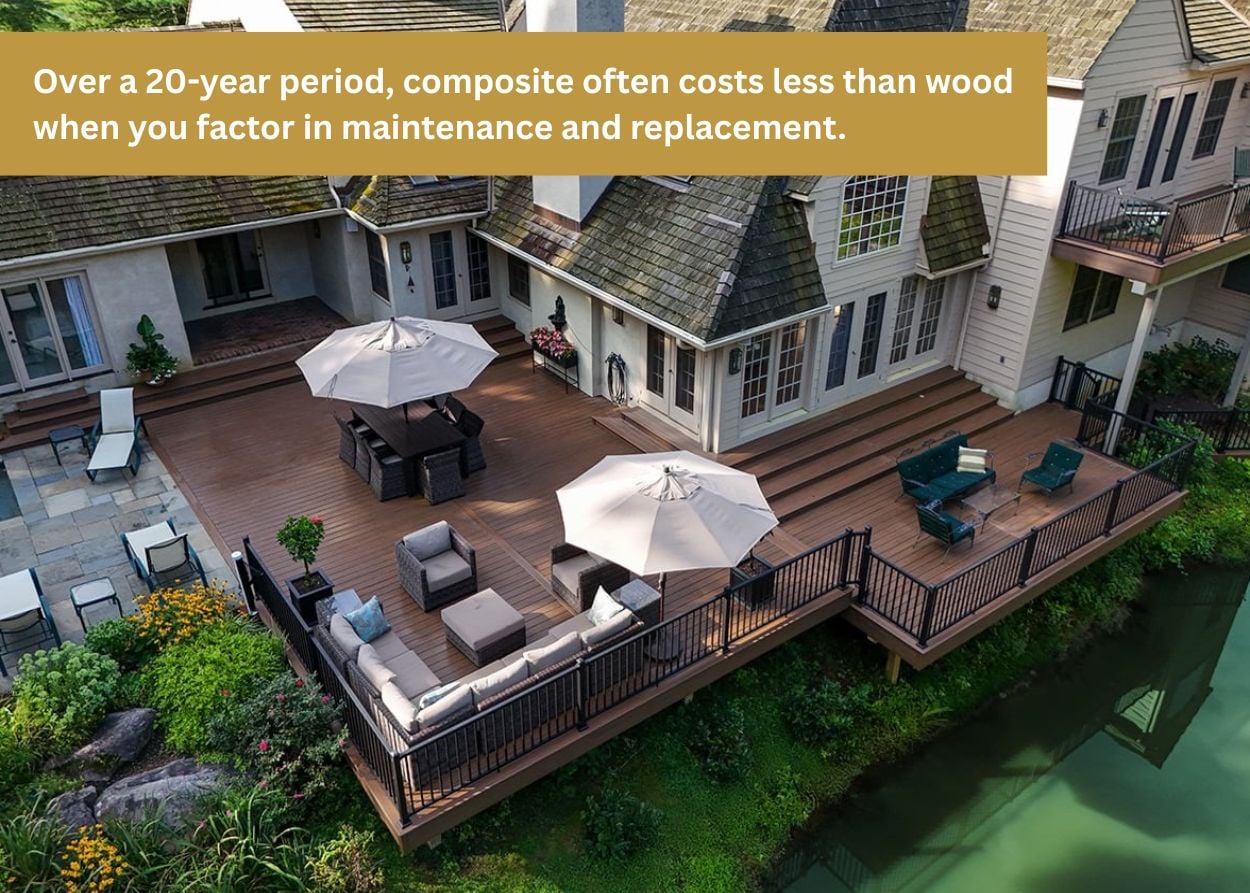
Over a 20-year period, composite often costs less than wood when you factor in maintenance and replacement.
Think of it like a car. The one with a higher sticker price sometimes has a lower total cost of ownership.
Maintenance: What Each Material Actually Demands
Let's get specific. Because "low maintenance" and "high maintenance" are vague, here's what each material actually asks of you year after year.
Wood Deck Maintenance Checklist
- Annual cleaning: Sweep debris, scrub with a deck cleaner to remove mildew and dirt
- Every 2-3 years: Sand the surface and apply a fresh coat of stain or sealant
- Inspect regularly for soft spots, rot, popped nails, and cracked boards
- Replace boards as needed-usually starts happening around years 5-10 with pressure-treated pine
- Check for insect damage, especially carpenter ants and termites, which are active in PA
Miss a staining cycle? Moisture gets in. Boards start to gray, crack, and warp. It snowballs quickly.
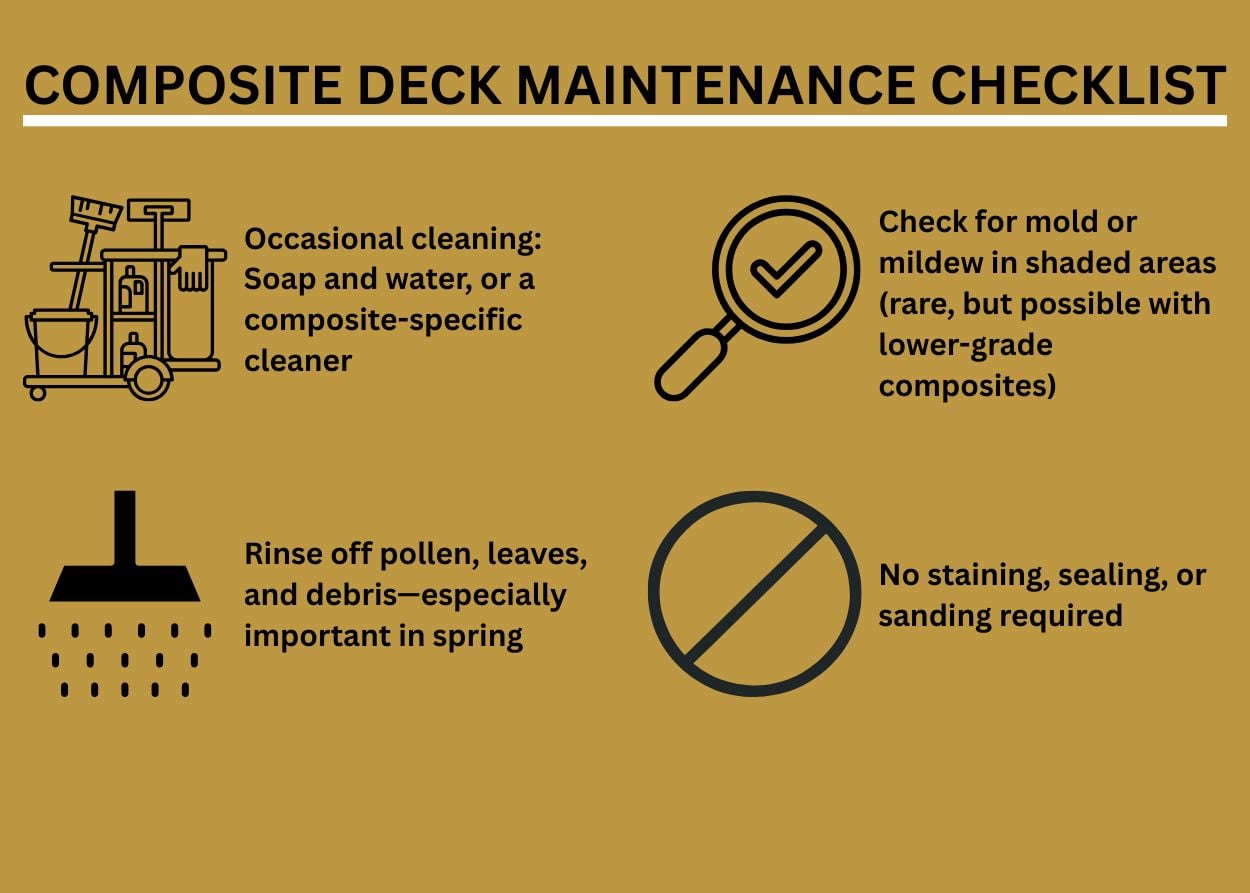
Composite Deck Maintenance Checklist
- Occasional cleaning: Soap and water, or a composite-specific cleaner
- Rinse off pollen, leaves, and debris-especially important in spring
- Check for mold or mildew in shaded areas (rare, but possible with lower-grade composites)
- No staining, sealing, or sanding required
And that's all there is to maintaining a composite deck.
For busy families, that's a huge draw. A Saturday that used to mean renting a power washer, buying stain, and spending half a day on the deck, assuming the weather cooperates, now means a 20-minute rinse.
However, not all composites are created equal. Budget composite products can fade, stain, or get slippery. High-quality capped composite-where the wood fiber core is fully enclosed in a protective polymer shell-performs significantly better. Ask your contractor what's actually in the product you're considering.
Aesthetics & Design Options
Wood has one undeniable advantage: it looks like wood.
There's a warmth and natural grain to real lumber that some homeowners simply prefer. It's not just aesthetics: some people are naturally inclined towards wood because the presence of wood contributes to good mental health. If you're going for a rustic, traditional, or cabin-inspired look, high-quality hardwood or even well-maintained pressure-treated pine can be beautiful.
The challenge is the consistent upkeep needed to keep that deck looking good. Wood that isn't regularly maintained turns gray and weathered quickly, especially in Pennsylvania's sun and rain.
Composite Has Come a Long Way
If you're thinking that composite decking looks flat, uniform, and fake, that's because you're thinking of early composite products from the 1990s and 2000s. That's not the case anymore.
Today's composite decking comes in:
- Realistic wood-grain textures that are hard to distinguish from real lumber at a glance
- Wide color ranges-warm browns, grays, charcoals, and even multi-toned boards that mimic natural wood variation
- Multiple finishes-matte, satin, and even brushed textures
- Consistent appearance that doesn't gray, fade, or develop uneven weathering over time
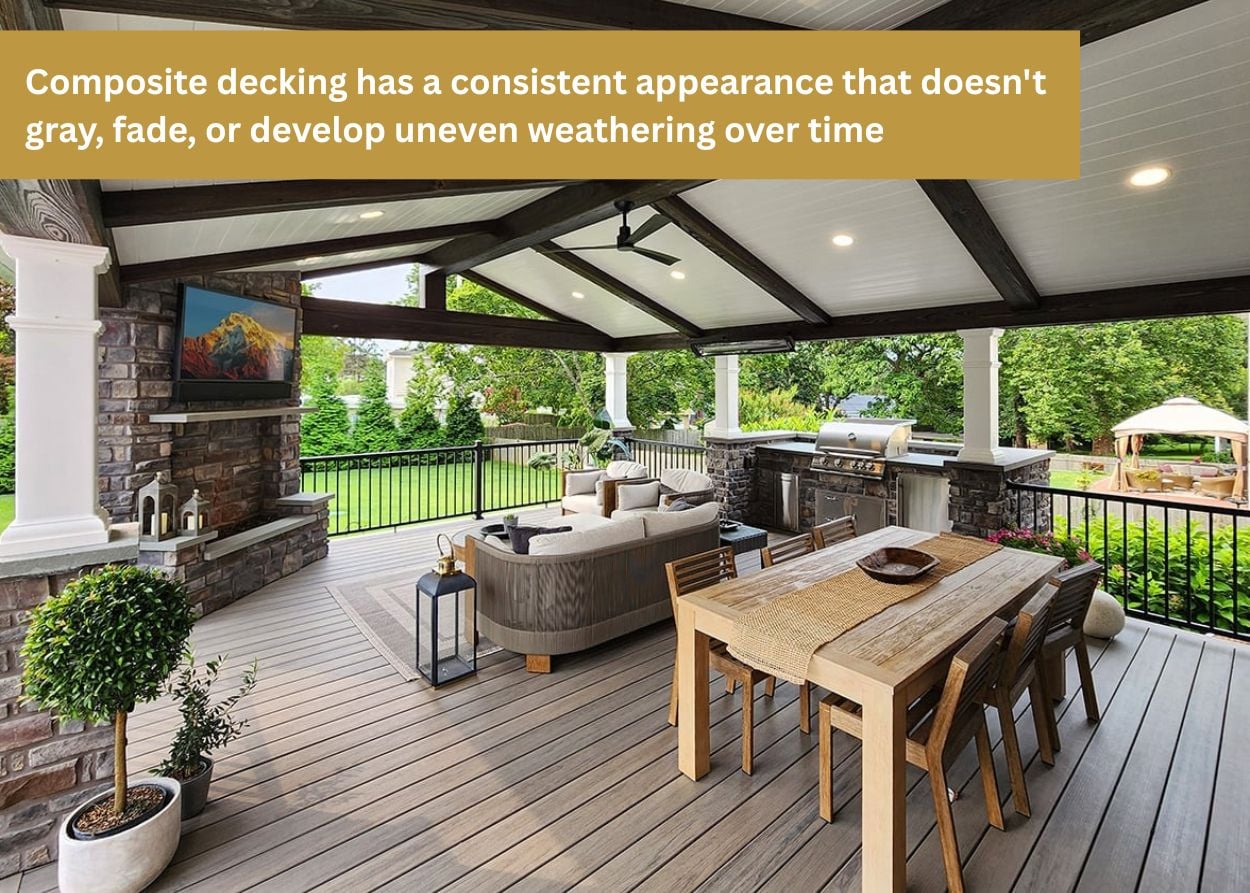
For homeowners who want a specific aesthetic-a modern gray deck, a deep walnut tone that stays rich year after year-composite actually offers more control and consistency than wood.
Design flexibility matters too. Both materials work well with:
- Pergolas and shade structures
- Built-in benches and planters
- Multi-level deck designs
- Cable or glass railings for a modern look
The material choice affects the surface boards, not the underlying structure. So your design options are mostly wide open, regardless of which direction you go.
Which Material Is Right for You?
There's no universal answer. But here's a simple way to think through it.
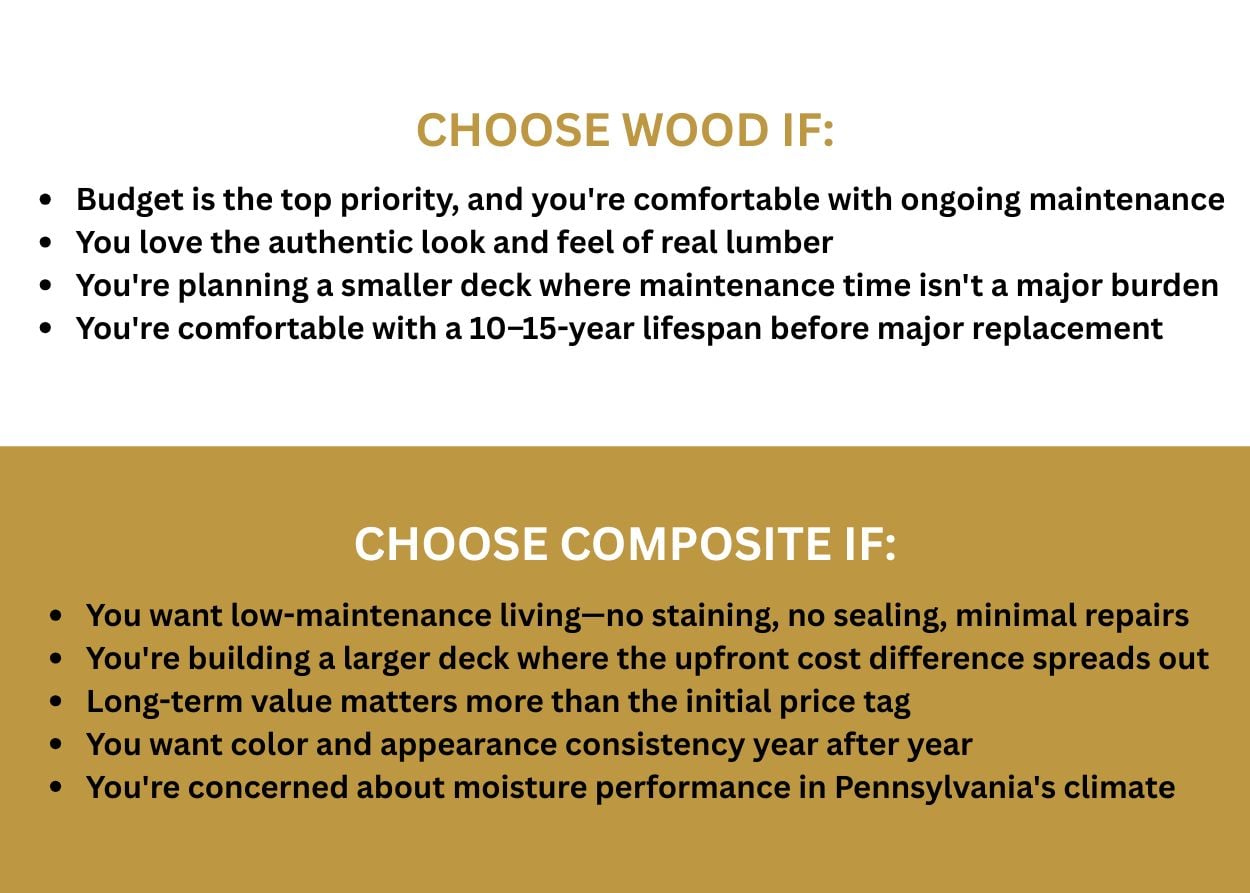
Choose Wood If:
- Budget is the top priority, and you're comfortable with ongoing maintenance
- You love the authentic look and feel of real lumber
- You're planning a smaller deck where maintenance time isn't a major burden
- You're comfortable with a 10-15-year lifespan before major replacement
Choose Composite If:
- You want low-maintenance living-no staining, no sealing, minimal repairs
- You're building a larger deck where the upfront cost difference spreads out
- Long-term value matters more than the initial price tag
- You want color and appearance consistency year after year
- You're concerned about moisture performance in Pennsylvania's climate
Natural Alternatives
Some homeowners consider naturally rot-resistant hardwoods like Ipe (popular for wet conditions like docks or boardwalks) or Tigerwood (the Amazonian timber, not the golfer). These perform very well in Pennsylvania's climate and last longer than pressure-treated pine.
The tradeoff is that they're expensive-often $8-$15+ per linear foot-and they still require periodic oiling to maintain their color and resist cracking. They're worth it for the right project, but just know what you're getting into.
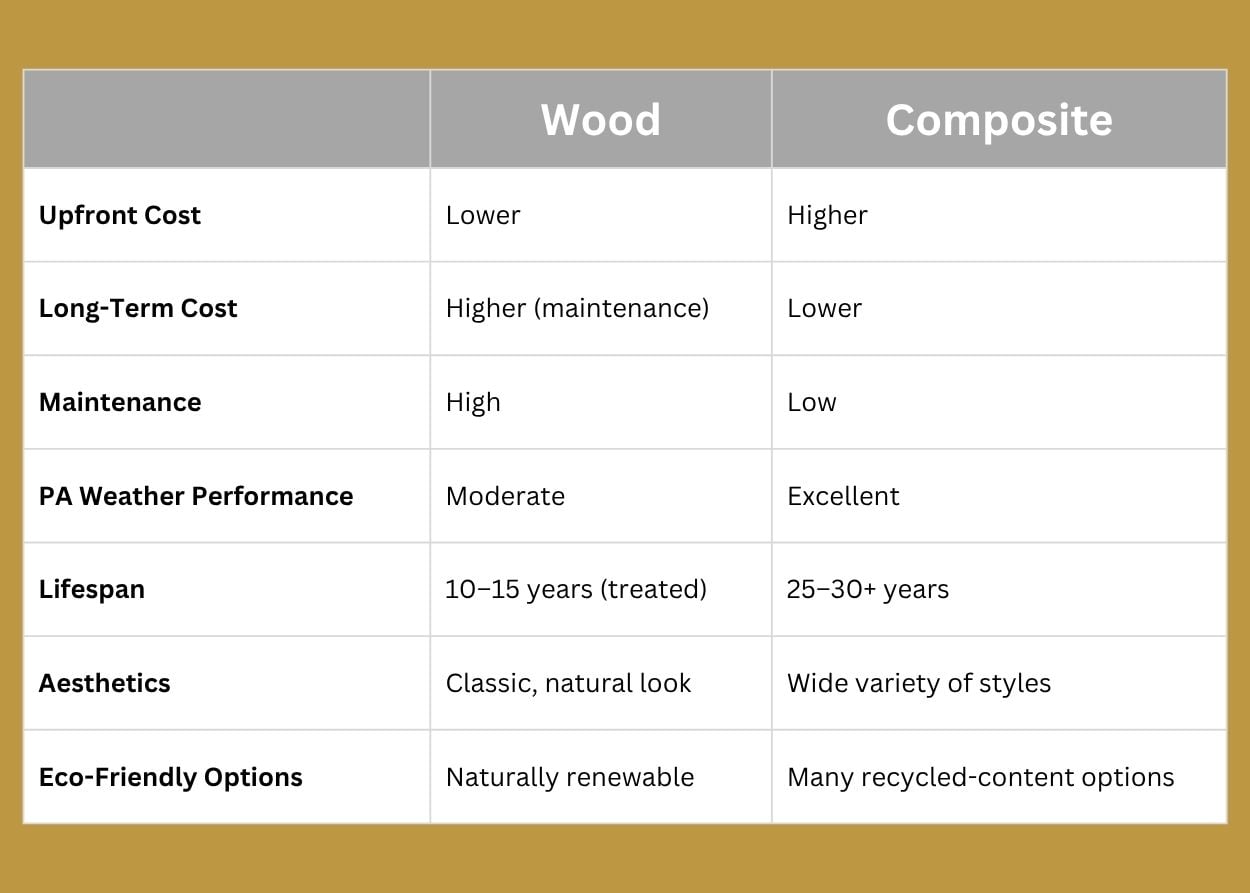
A Quick Comparison
It's a lot of information, and both materials have their pros and cons. To help with your decision-making, we've distilled it down into a quick chart:
Ready to Build? Here's What We Recommend
After 40+ years of building decks in Pennsylvania, here's what we tell most homeowners:
If you're building for the long haul, composite usually wins.
The upfront cost is significant, but the maintenance savings, the extended lifespan, and the performance in Pennsylvania's freeze-thaw climate make it the smarter investment for most families.
That said, every project is different. For a smaller ground-level platform for a modest budget, pressure-treated pine might be exactly right. But for a large, multi-level deck you want to enjoy for the next 25 years without lifting a paintbrush, composite is hard to beat.
The best thing you can do is talk through your specific goals with someone who knows what holds up in this region.
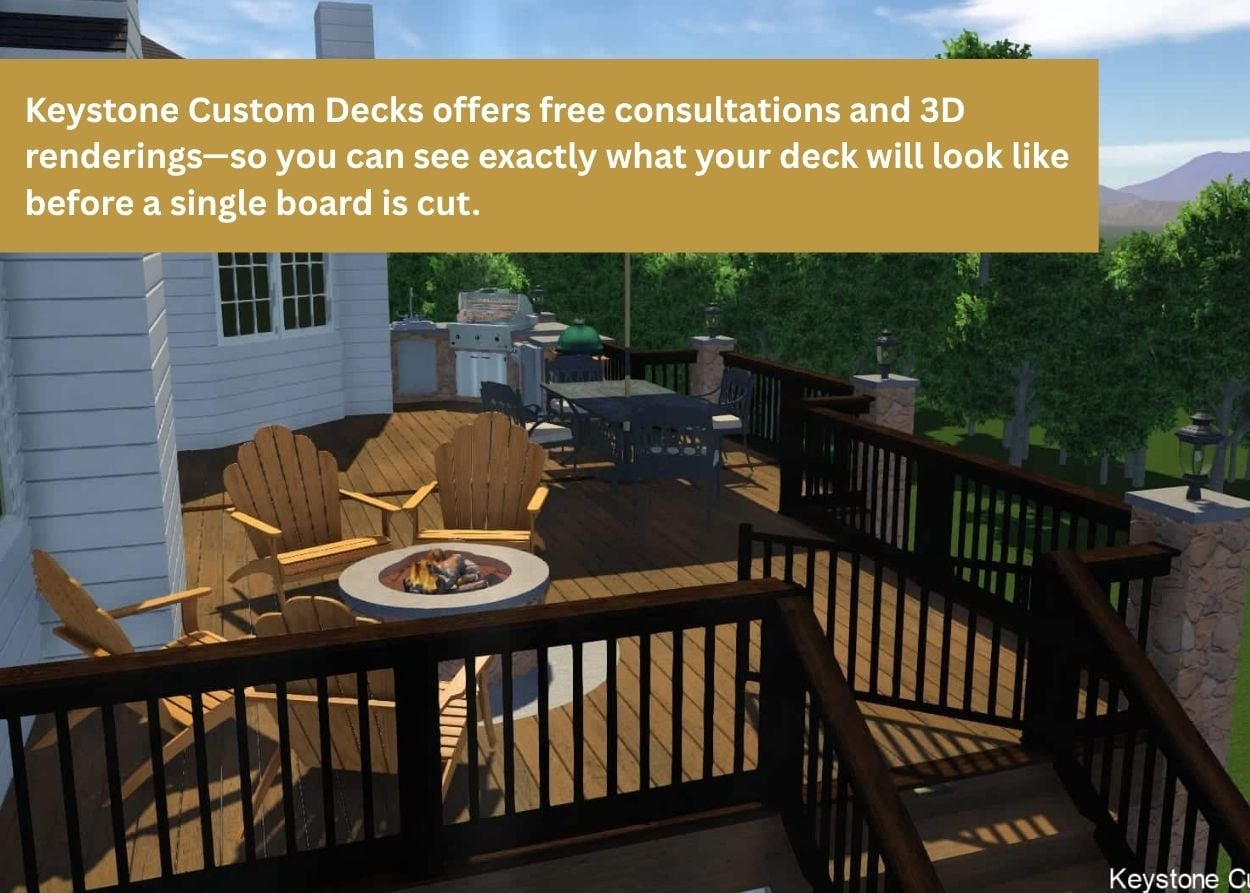
Keystone Custom Decks offers free consultations and 3D renderings-so you can see exactly what your deck will look like before a single board is cut. We'll walk you through material options, help you compare real costs, and design something you'll love for decades.
Let's build something that lasts.
Contact us today to get started!