

Different Types of Fire Pits: How to Choose the Right One for Your Backyard
Table of Contents:
It’s a crisp, cool fall evening, and the kids are roasting marshmallows. Your neighbor "just happened" to stop by (with a chair, of course). You're sitting back, warm, comfortable, and those buzzing mosquitoes from July are but a distant memory.
That's the fire pit life, and it's one of the easiest upgrades you can make to your outdoor living space. But it’s not as simple as buying one, as they’re not a one-size-fits-all deal.
If you look at any home improvement or landscaping store’s fire pit selection, or browse through Pinterest, you'll see wood-burning pits, gas pits, stone pits, steel bowls, portable models, built-in features, and even just a spot on the ground.
It’s a burning question that Keystone Outdoor Living has been helping homeowners answer since 1983. So gather up your marshmallows and coffee, because we’re going to show you what you need to know to get the perfect fire pit for your family.
TL;DR - Picking the Right Fire Pit for Your Backyard
No time to read? Here’s a quick summary:
- Choose between wood for heat and ambiance, or propane/natural gas for smoke-free convenience.
- Portable units offer flexibility and lower cost, while permanent structures add property value and act as landscape anchors.
- Select materials like stone or steel based on your desired aesthetic and willingness to perform maintenance.
- Always verify local township ordinances regarding clearance distances and fire pit sizes before installation.
3 Fire Pit Fuel Types (And Which One Fits Your Life)
Before you think about looks, think about fuel. It's the single biggest factor in how your fire pit will actually feel to use.
1. Wood-Burning Fire Pits
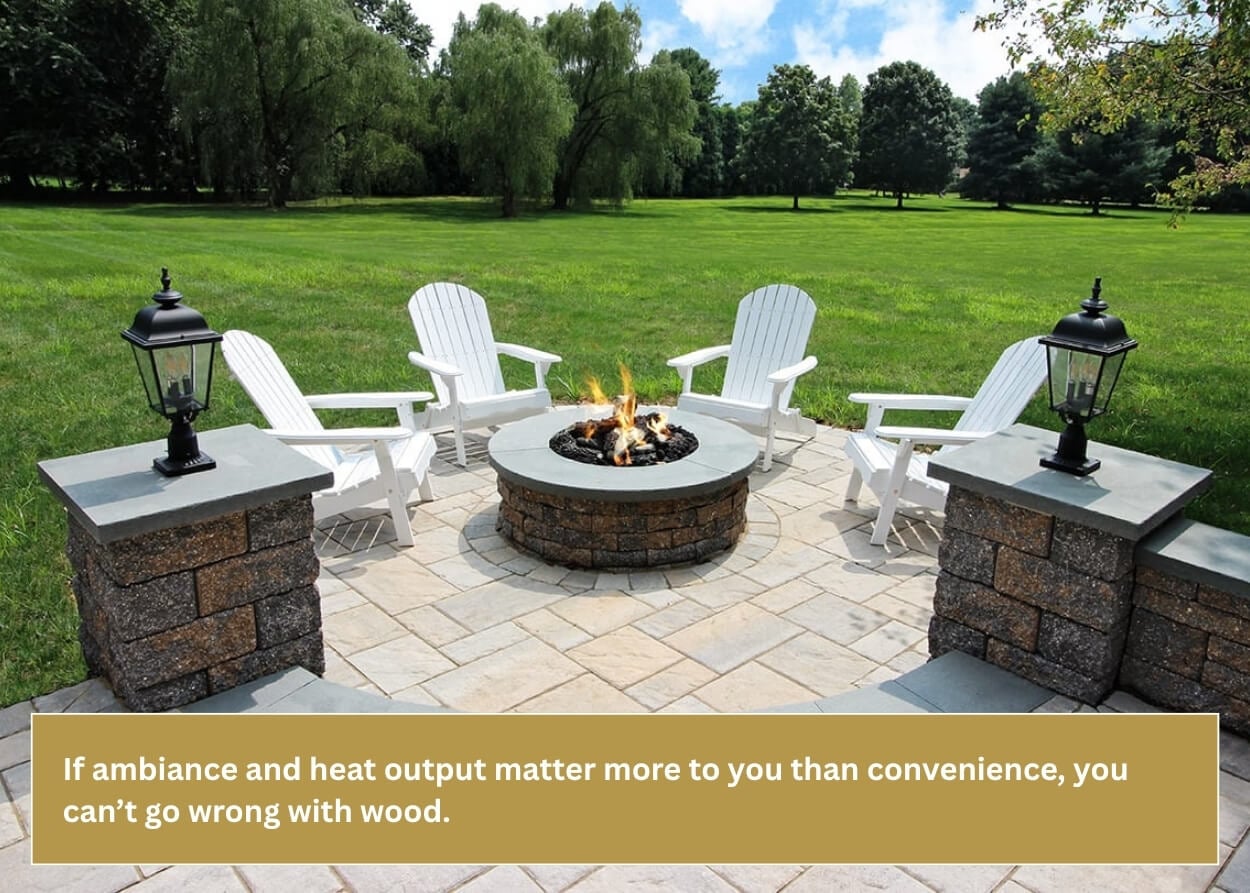
There's nothing like a good old-fashioned wood fire. It’s that comforting crackle, smell, and the way the flames dance higher than any gas burner could manage.
The upside: wood-burning pits are usually the most affordable option upfront, and they throw the most heat. You don’t have to worry about gas lines or hookups. Some wood and a match is all you need.
The downside: you’ll have to deal with smoke. The wind shifts, and suddenly everyone's eyes are watering. You'll also need a steady supply of firewood, ash cleanup becomes part of your weekend routine, and everyone’s going to smell like smoke after.
If ambiance and heat output matter more to you than convenience, you can’t go wrong with wood.
2. Propane Fire Pits
Propane pits run off a portable tank, which means you won’t need a permanent gas line and you won't have to dig up your yard. Turn a knob, and you've got flames in seconds.
The upside: minimal smoke, adjustable flame height, and true portability. Move it to the patio one night and the fire pit table area the next.
The downside: you'll need to keep an eye on your tank level (nothing kills the mood like running out of propane mid-conversation), and propane can cost more over time than natural gas.
3. Natural Gas Fire Pits
If your home already has a gas line, a natural gas fire pit taps right into it: no tanks to swap, no trips to the hardware store. Just flip a switch and go.
The upside: it's the most convenient option long-term, and there's no smoky smell to bother your guests (or your neighbors).
The downside: installation usually means running a gas line, which is a job for a specialized contractor, not a weekend DIY project. It's also a permanent commitment. Once it's installed, it's not moving.
Remember that getting that fire pit, whether it’s a DIY brick fire pit or custom gas setup, is a one-time cost. Fuel is a consumable, so consider the differences in cost, as it’ll either warm your heart or burn a hole in your pocket.
Portable vs. Permanent: Which Fits Your Backyard?
Fuel type answers "how does it burn?" This next question answers "where does it live?"
Portable fire pits are exactly what they sound like. They're freestanding units you can pick up and move whenever the mood (or the party) shifts. They're an ideal choice if you rent, if your outdoor layout changes from season to season, or if you just don't want to commit to one spot forever. And if you’re going portable, why not skip the smoky eyes and clothes by getting a fancy smokeless portable fire pit?
Permanent fire pits are built into your landscape design, often with stone or masonry seating walls surrounding them. They typically require professional installation and, depending on your township, a permit. But a well-designed permanent fire feature becomes the anchor of your whole outdoor living space, and it can add real value to your property.
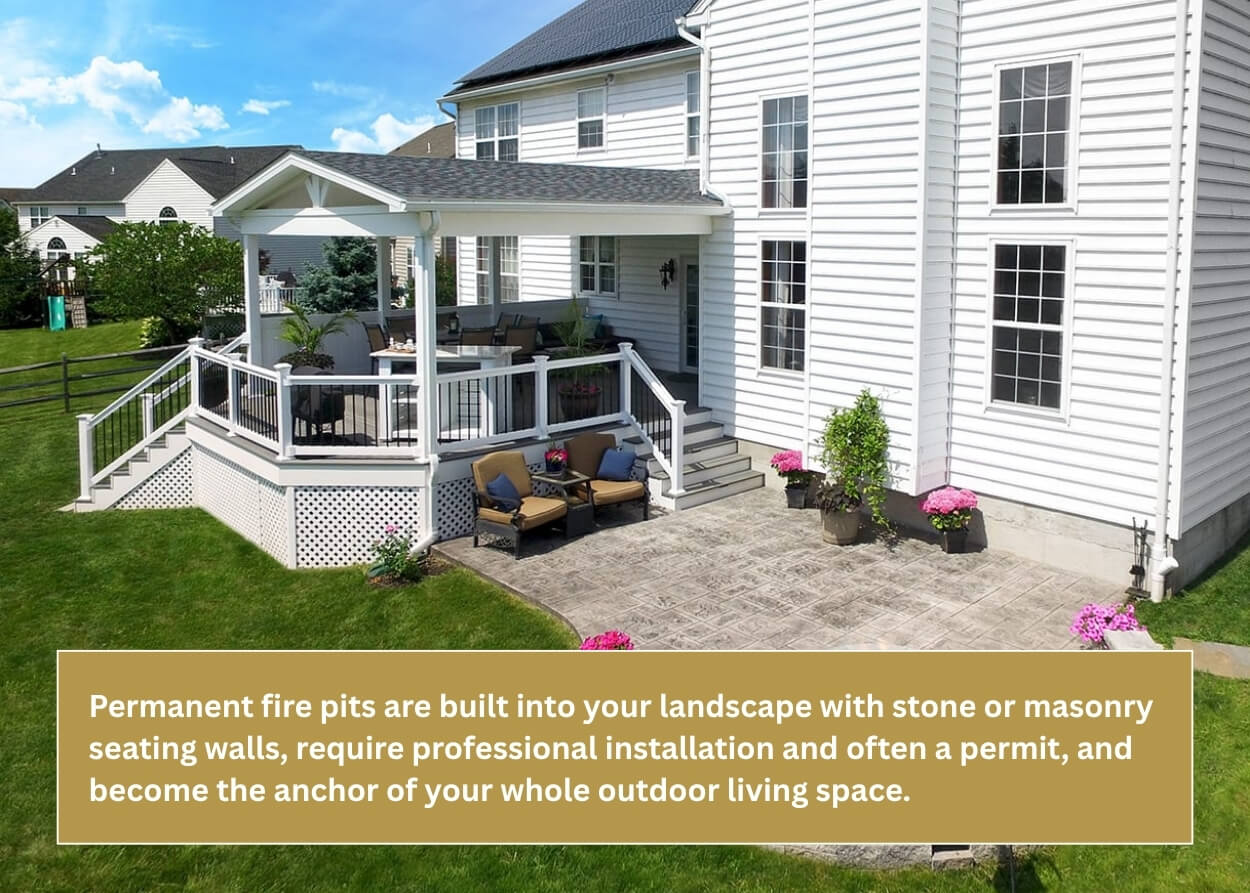
So which one is right for you? Ask yourself this: do you want a fire pit that fits into your yard, or a yard that's designed around your fire pit? If it's the second one, permanent is your answer.
5 Fire Pit Materials, Compared
Once you've settled on fuel and format, it's time to think about what your fire pit is actually made of. This is where durability meets curb appeal.
Natural stone. Granite, slate, and fieldstone hold up better than almost anything else. It's heavy, it's not going anywhere, and it looks like it belongs in a Pennsylvania backyard. The tradeoff? It's pricier, and it's not something you're moving on a whim.
Concrete. Budget-friendly and endlessly customizable. Concrete fire pits can be poured or precast into nearly any shape, and they hold heat well. Over time, though, they're more prone to cracking and fading than stone or steel.
Steel. Modern, sleek, and tough. Powder-coated and stainless steel fire pits resist rust and corrosion better than most metal options, which makes them a solid pick if you want something that looks clean year after year.
Cast iron. Cast iron holds heat beautifully, but it needs some care. Skip the seasoning and regular upkeep, and rust will find its way in.
Copper. Copper develops a gorgeous natural patina as it ages, which is exactly why some homeowners love it. Just know it comes at a higher price point and needs regular cleaning if you want to keep that original shine.
There's no wrong answer here. It comes down to how much maintenance you're willing to do and what look fits your outdoor space.
4 Things to Check Before You Buy
Here's where a lot of homeowners get tripped up. The fire pit itself is the easy part. Where you put it, and how you're allowed to use it, is where things get complicated.
- Backyard size and layout. Before you fall in love with a fire pit, measure your space. You'll need room for the pit itself, seating around it, and clearance beyond that (more on that in a second). A fire pit crammed into a tiny patio isn't relaxing. It's a hazard.
- Seating and traffic flow. Think about how people will actually gather around it. Will guests walk behind seating to reach the house? Is there a clear path away from the flames? Good fire pit design accounts for how people move, not just where the fire sits.
- Local regulations and clearance. This is one many people fail to check on, and it's the one that can get you a fine. Pennsylvania doesn't require a state permit for a residential fire pit, but they do have guidelines for safe size and placement. The general rule of thumb across the state is at least 15 feet of clearance from any structure, with a maximum fire pit diameter of 48 inches.
But townships can, and do, set their own rules on top of that. East Earl Township, where Keystone Custom Decks calls home, requires open fires to stay at least 75 feet from any structure under its 2020 burning ordinance, with a narrower exception for small recreational wood fires under 6 feet in diameter. Every township is different, so call your local office before you dig, pour, or install anything permanent.
- Intended use. Are you cooking over it? Just enjoying the ambiance? Entertaining a crowd every weekend, or keeping things quiet and low-key? Your answer shapes everything from size to fuel type to material.
We’ll Build the Fire, You Bring the Marshmallows
There's no single "best" fire pit. There's only the best fire pit for your backyard, your budget, and how you actually plan to use it.
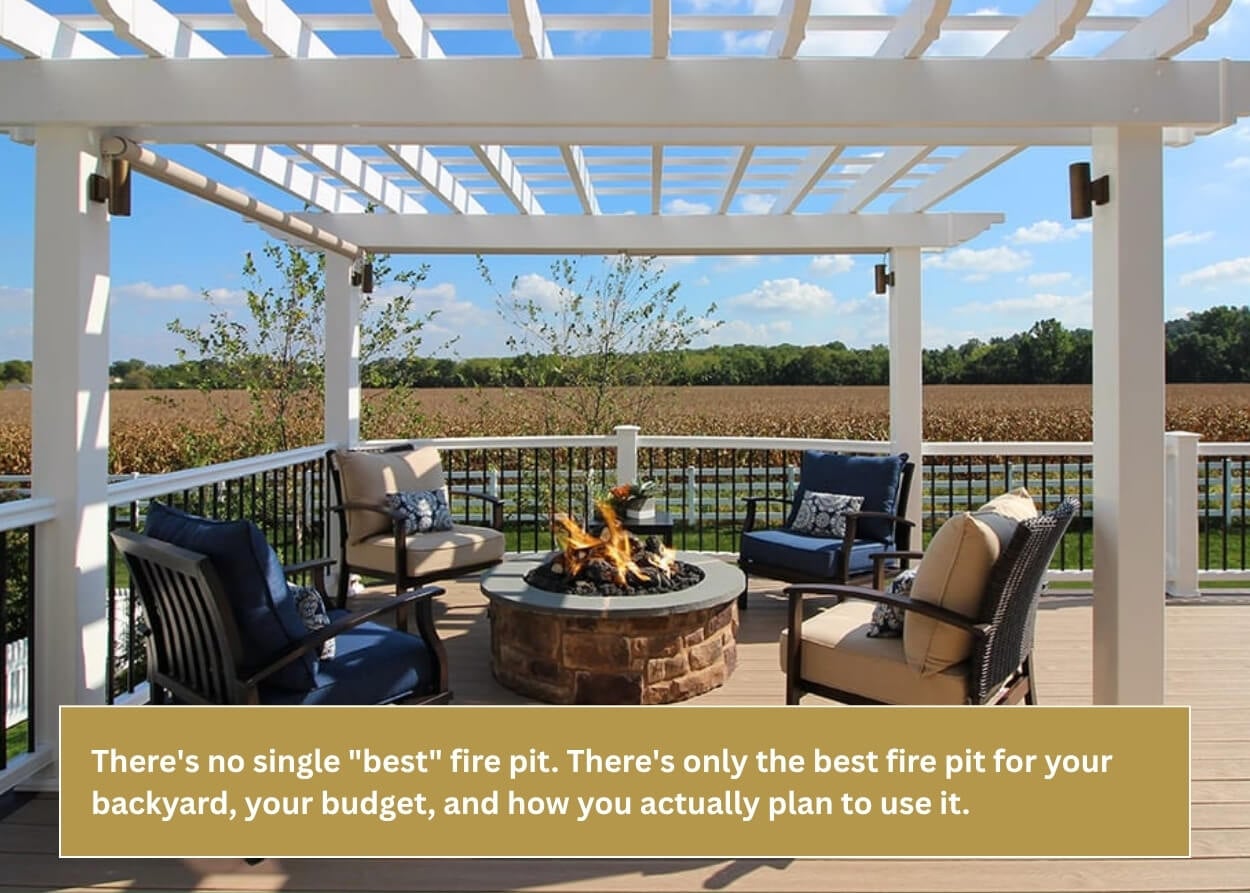
Maybe that's a portable propane pit you can move around the patio, or a permanent natural stone feature built into a new patio design, the kind of thing your neighbors will ask about for years. Either way, the right choice comes down to fuel, format, material, and a little homework on local rules.
That last part is where we come in. At Keystone Custom Decks, we design complete outdoor living spaces, including fire features, and we know the ins and outs of Pennsylvania backyards because we've been building them for over 40 years. If you're ready to turn your backyard into the spot everyone wants to be, reach out to our team. We'll help you build it right, from the first spark to the last marshmallow.