

Does a Deck Increase Home Value in Pennsylvania
Too Long Didn't Read (TL;DR):
- Adding a deck in Pennsylvania may return 40%–50% of its resale cost, higher than the national average.
- Wood offers better upfront ROI because it has a lower initial cost, but requires more maintenance; composite is low-maintenance and longer-lasting, so it may be more attractive to potential buyers.
- Pennsylvania’s regional climate makes multi-season decks more desirable to buyers.
- Design, permits, and quality construction can make or break your deck’s impact on home value.
If you’re a Pennsylvania homeowner wondering whether a deck is worth the investment, you’re not alone. Maybe you’re thinking about hosting more family get-togethers. Or creating a space to relax in the evenings. But deep down, you're also wondering: Will this increase my home’s value?
That’s a valid question for those considering investing in a deck. Here at Keystone Outdoor Living, we’ve been helping homeowners think through questions about new decks for decades. We’ve written this article to help you understand some of the nuances of decks and home value in Pennsylvania.
Let’s break it down.


Average ROI of Adding a Deck in Pennsylvania vs. National Averages
Let’s talk numbers.
Pennsylvania homeowners often see a return of 50.2% for wood decks and 39.8% for composite, according to 2023 numbers from The Journal of Light Construction.
Since Pennsylvania has four distinct and beautiful seasons, decks here often have a higher ROI than some parts of the US. It’s nice to have a convenient spot to enjoy those changing seasons, especially PA’s lovely Summers and Autumns.
But ROI isn’t one-size-fits-all. If your home is in a neighborhood where decks are in high demand—or you’ve added premium features like built-in lighting, covered seating, or fire elements—your return could be even higher.
Just remember: ROI isn’t only about dollars and cents. A well-built deck increases buyer interest, shortens time on market, and makes your home more memorable in competitive markets.

So yes—a deck can absolutely increase your home value in Pennsylvania. But the type of deck you choose plays a huge role in just how much value it adds. Let’s talk about that next.
How Deck Material (Wood vs. Composite) Influences Value
When it comes to decking materials, there are two leading players on the field: wood and composite decking. The material you choose impacts the ROI on your deck.
Wood decks are often cheaper to build. They look great, feel warm underfoot, and give that classic backyard feel. But they need regular upkeep such as staining, sealing, and replacing boards.
Composite decking, on the other hand, costs more upfront but demands far less maintenance over time. It resists moisture, fading, insects, and mold—things Pennsylvania weather loves to throw at us.

Here’s the tradeoff:
- Wood offers a lower upfront cost, higher maintenance, and slightly better ROI on paper.
- Composite = higher cost, low maintenance, longer lifespan, and more appeal to modern buyers.
Think of it like buying a car. A used car is cheaper, but a new one comes with fewer headaches.
Today’s buyers—especially younger ones—often lean toward low-maintenance options. That means a well-designed composite deck might give your home an edge on the market, even if the ROI percentage is slightly lower.
Regional Climate and How It Affects Deck Usage and Resale Appeal
Pennsylvania weather is a mixed bag—hot summers, snowy winters, wet springs. It’s the full menu. That makes it an interesting and dynamic spot to live, but it also means that outdoor living spaces need to be versatile.
In other words, a Pennsylvania deck built for year-round use is incredibly valuable.
Homeowners here aren’t just looking for somewhere to grill. They want a space that can be used from April to October (and longer if there's a fire pit or heater involved).
Buyers in Pennsylvania often look for:
- Covered or partially covered decks
- Durable, weather-resistant materials
- Built-in seating, lighting, or heating features
In short, the more functional your deck is in all four seasons, the more value it adds.

Decks that offer more than just a flat surface will naturally appeal to buyers—especially in areas with strong seasonal swings like ours.
Why Quality, Permits, and Design Matter to Appraisers and Buyers
Here’s something most people don’t consider: a poorly built deck can actually hurt your home value.
If the structure is shaky, the materials are rotting, or it was built without permits? Appraisers and home inspectors will catch it. And buyers will see a headache—not a selling point.
In other words, quality matters. A lot.
So do permits. A permitted deck tells buyers the structure meets local codes. That gives peace of mind—and reduces delays during a home sale.
Design also plays a significant role:
- A well-designed deck that connects smoothly to your home’s layout = bonus points.
- A deck with no flow or one that eats up the whole yard = red flag.
Function, structure, and style: when these three elements align, you’re not just adding a deck—you’re adding serious value.
Tips for Homeowners to Get the Best Return on a New or Upgraded Deck
So what should you do if you're thinking about adding or upgrading a deck?

Here are five tips to help you get the most bang for your buck:
- Match the deck to your home’s style. Don’t build something that looks out of place. The deck should feel like it belongs there—both in design and materials.
- Think about future buyers. What will a future buyer value? Think about what fits in your setting and neighborhood.
- Choose materials wisely. A wood deck costs less up front, but think carefully about maintenance needs before committing. If you want low maintenance, composite may be worth the upfront cost for less hassle and more long-term appeal.
- Add useful features. Built-in benches. Storage. Lighting. Shade structures. These all increase the usability of your deck—and its value.
- Hire a professional. DIY might seem like a cost-saver, but buyers and appraisers will notice. A professional knows how to build a deck that’s code-compliant, visually appealing, and value-boosting.

So… Does a Deck Increase Home Value in Pennsylvania?
In most cases, yes. A deck adds value to your home.
Especially when it’s:
- Well-designed
- Built with the right materials
- Maintained properly
- Suited to the regional climate
If you’re considering an upgrade, it’s smart to talk to someone who knows what local buyers look for. That’s where a trusted name like Keystone Outdoor Living comes in. With years of experience designing and building decks across Pennsylvania, we understand what adds value—and what doesn’t.
We offer a variety of outdoor living services, including:
- Custom decks
- Patios
- Porches and porticos
- Outdoor furniture
- Outdoor kitchens
- Firepits and fireplaces
- Water features
- And more!
Contact us today to start the conversation about your dream outdoor living space.
7. Is a salt-water or chlorinated system better?
Each system has pros and cons, but salt-water systems have many desirable advantages.
Research indicates saltwater systems are healthier and safer since they don't require storing and handling harsh chemicals. Because salt has lower chlorine levels, it's also gentler on the skin and eyes and creates softer-feeling water.
If you use salt, the harsh chlorine smell often hanging around pools will disappear. A saltwater system also decreases maintenance requirements in some cases (like with fiberglass pools). Salt keeps the water clean for longer than chlorine does, meaning you won't spend as much on day-to-day chlorination costs. Because of these factors, saltwater systems usually end up saving you money in the long run.
There are some cons to saltwater systems, though. In concrete pools, salt can speed up erosion. Saltwater systems are also more expensive upfront and, because they are more complicated, require a technician to do repairs.
Conclusion
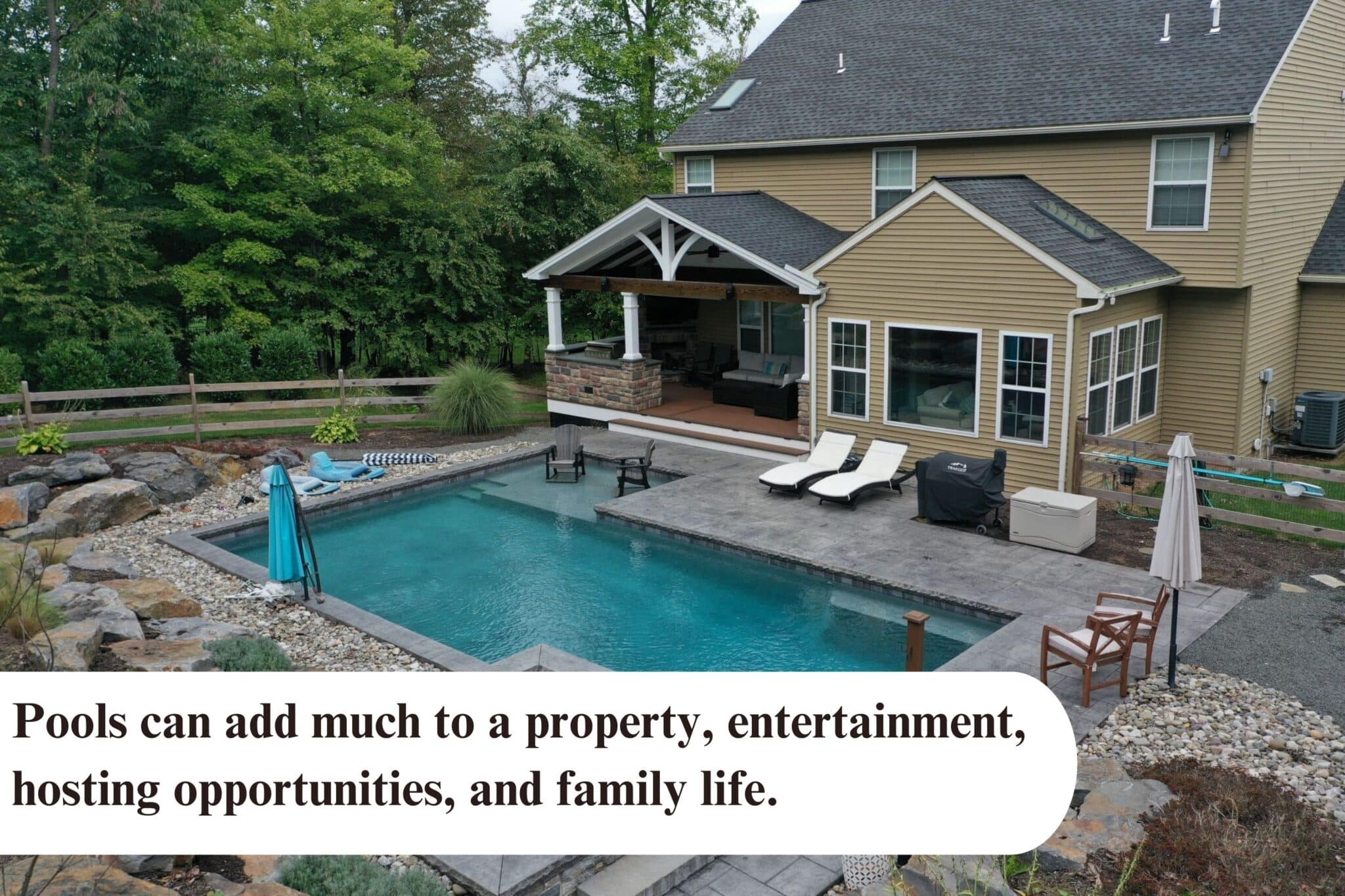
Pools can be a great addition to a home and provide the opportunity for hours of fun! If you are interested in starting the process of purchasing your own custom pool or have some more questions, contact us today!
If you found this article helpful, you'll probably enjoy our blog, Top 7 Pool Deck Ideas (and how to take your pool to the next level).
In addition to building pools, Keystone Custom Decks builds other custom outdoor living spaces. These include pergolas, patios, decks, outdoor kitchens, and more!
We would love to work with you on your next outdoor living project. We hope to hear from you soon!