

Outdoor Kitchen Appliances: 3 Must-Haves and 5 Upgrades Worth the Splurge
Picture the grill going, someone with a drink in hand, and the whole crew hanging out in the backyard instead of crowding your kitchen. That's the dream.
But then you start shopping for an outdoor kitchen, and suddenly you're staring at a list of appliances longer than your fridge's. A pizza oven? A kegerator? Do you need all of that?
Short answer: no. Most of it is nice to have, but not necessary.
We’re Keystone Outdoor Living, and we build outdoor kitchens across Pennsylvania, from small grill stations on a deck to full entertaining setups with more counter space than some kitchens indoors. So we've seen what people actually use after the excitement of a new build wears off, and what ends up collecting dust under a cover.
Let's sort the essentials from the extras, then cover the parts nobody thinks about until it's too late: permits, electrical, and whether your deck can even handle the weight.
TL;DR - What appliances do you really need in an outdoor kitchen
- Keep setups simple with a grill, counter space, and storage.
- Upgrades like fridges and pizza ovens are best for frequent entertainers.
- Always check local building codes for permits when installing gas, electrical, or plumbing.
- Professional installation is essential for gas lines to ensure safety and code compliance.
- Verify your deck's structural capacity to support the weight of heavy, built-in kitchen appliances.
3 Bare Essentials for a Modest Deck Setup
If you're working with a smaller deck, or just want to keep things simple, here's what you need to get cooking:
- A quality grill. This is the whole point, so don't skimp here. A built-in gas grill with at least two burners covers almost everything you'll cook. Charcoal works too, if you're after that flavor, but it asks more of you in setup and cleanup.
- Counter space. You need somewhere to set down a plate, a cutting board, or a tray of raw chicken that shouldn't touch the same surface as your cooked food. A single run of counter on either side of the grill solves 90% of outdoor cooking headaches.
- Storage. A weather-resistant cabinet or two keeps tongs, plates, and grill tools where you need them instead of trekking back inside every five minutes. It's a small addition that changes how often you actually use the space.
That's it. That's a fully functional outdoor kitchen. Everything past this point is about how much easier and how much more you want the space to do, not whether it works.
5 Upgrades Worth Considering as You Scale Up
Once the basics are covered, here's the order most homeowners add on, from "nice bump" to "we're entertaining serious backyard traffic now."
- A side burner. Great for sauces, sides, or anything that needs a pot instead of grates. It turns your grill from "one dish at a time" into an actual cooking station.
- An under-counter refrigerator. No, it's not an overpriced mini fridge. It's a legitimate appliance, one that means no more warm cans and no more trips inside mid-cookout. This is usually the first big upgrade people say they wish they'd added from the start, and it's just so cool. (No pun intended.)
- A sink. Rinse vegetables, wash your hands, or clean up without going inside. It needs a water line, so it's a bigger install than it sounds; more on that in a minute.
- A pizza oven. Wood-fired or gas, this one's about the experience as much as the food. It's also the appliance most likely to turn "let's grill" into a full backyard event.
- A kegerator, wine fridge, or ice maker. This is the entertaining tier. If your outdoor kitchen doubles as the hub for get-togethers, this is where the "wow" factor lives.
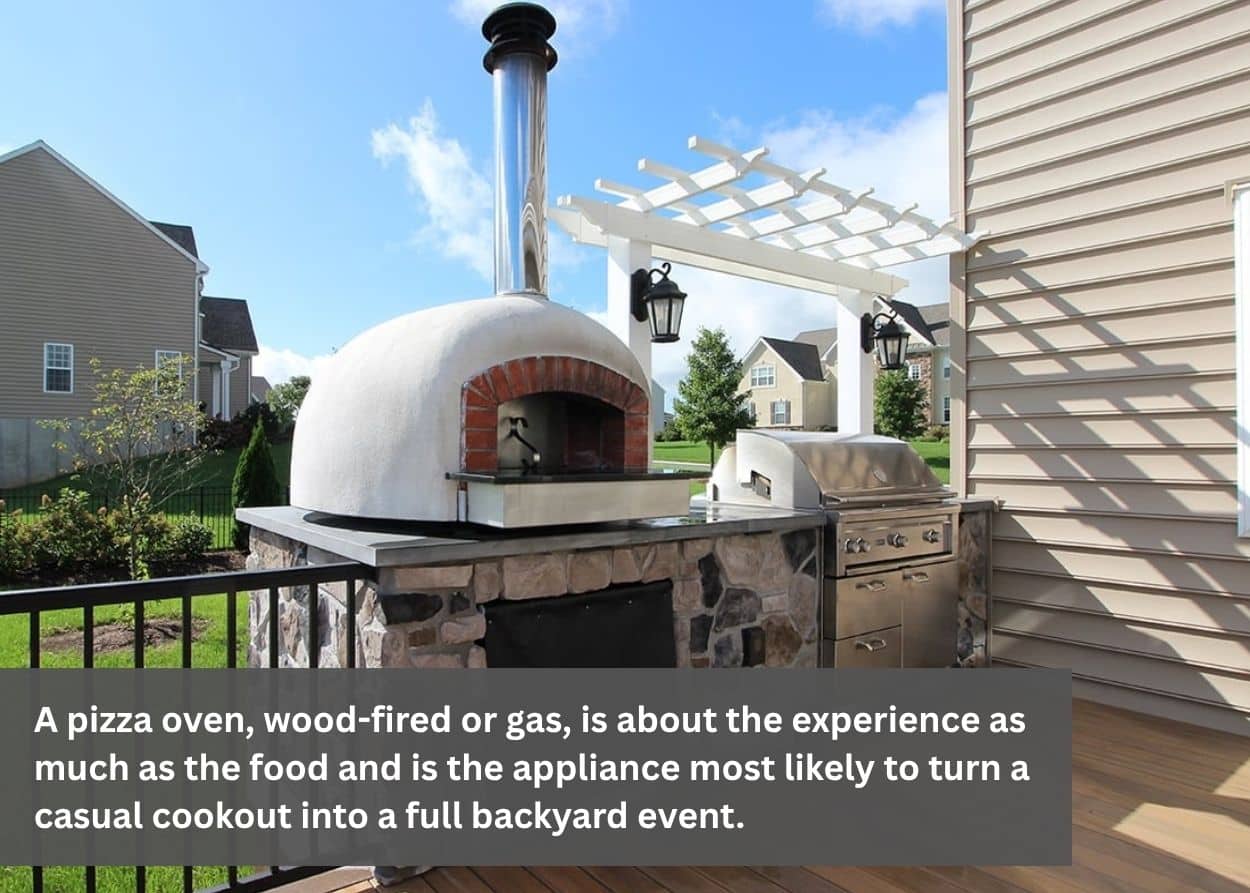
Here's the thing about that last group: none of it makes your food taste better. It makes hosting easier. If you throw parties, host the holidays, or just like having people over often, this tier pays for itself in convenience. If it's mostly you and your family a few nights a week, the essentials plus maybe a fridge will do the job.
Do You Need a Permit for Outdoor Kitchen Appliances?
Here's where things get less exciting and more important.
A portable propane grill sitting on your existing patio or deck? In most Pennsylvania jurisdictions, that doesn't require a permit.
A built-in kitchen tied into your home's gas line, electrical system, or plumbing? You’ll need a permit.
Pennsylvania enforces the Uniform Construction Code (UCC) statewide, and it requires a permit for changes to electrical, gas, mechanical, or plumbing systems, as well as new structures and additions. Running a gas line from your house to a built-in grill almost always falls into that category. So does adding a new electrical circuit or a plumbed-in sink.
The catch is that every township handles the application and review process a little differently, even though they're all working off the same state code. That's why we always tell people to check with their local building or zoning office before finalizing a design, not after the concrete's poured.
Skip the permit on work that needed one, and you're not just risking a fine. You're risking a home inspector flagging it when you eventually sell, or an insurance claim getting denied because the work wasn't up to code. Even if you’re planning on making this your forever home, you’ll land on everyone’s naughty list. It's a lot easier to make one phone call now.
Running a Gas Line? Leave This One to a Professional
Plenty of "how to run your own gas line" videos exist online. We'd steer clear.
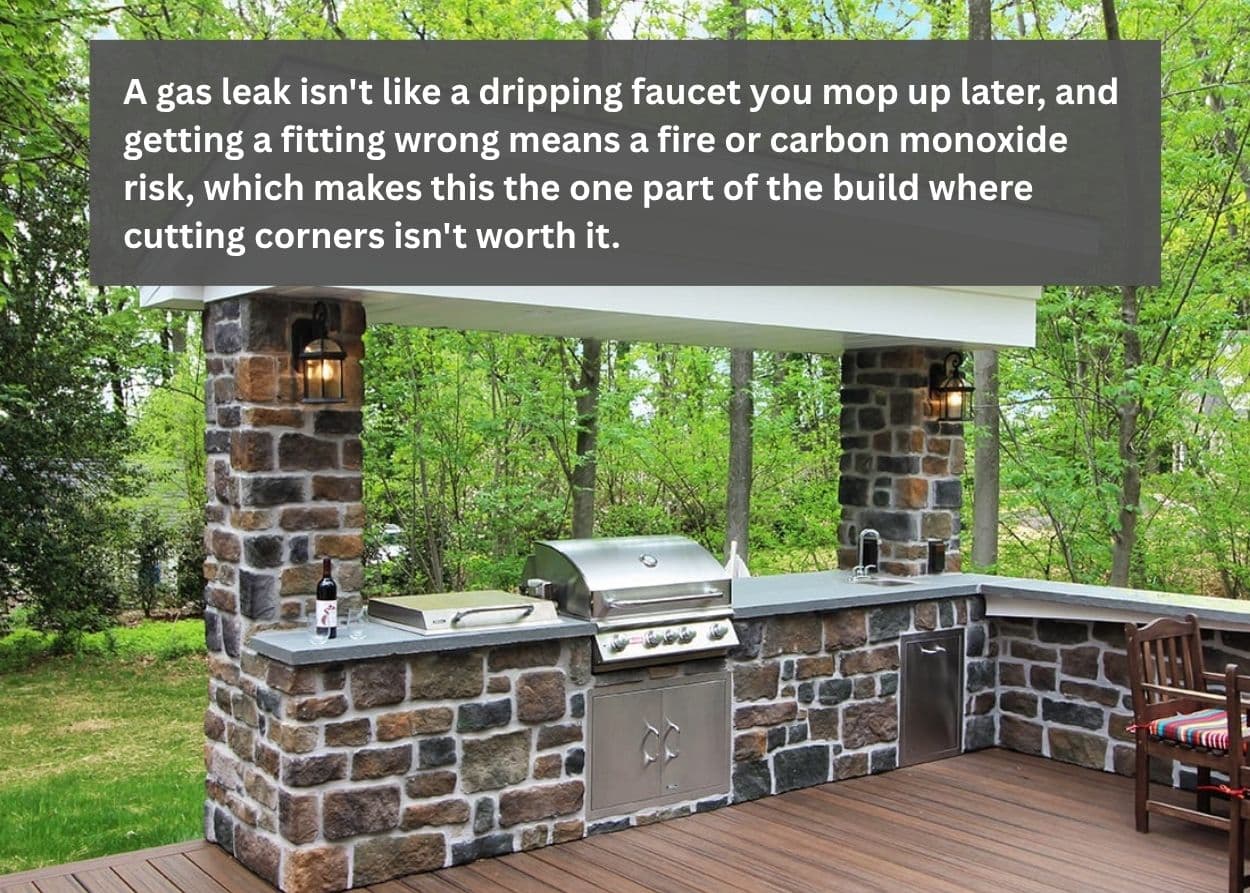
A gas leak isn't like a dripping faucet you mop up later. Get a fitting wrong, and you're looking at a fire or carbon monoxide risk, or worse: not a minor fix. This is the one part of the build where cutting corners just isn't worth it.
Here's what a licensed plumber or gas fitter handles for you:
- Sizing the line correctly. Your grill's inlet size doesn't tell you what pipe size you need. That depends on the total BTU demand across every appliance on the line and how far it runs from the meter. Undersize it, and nothing gets the pressure it needs to perform.
- Checking your meter's capacity. Add a gas-hungry kitchen to a system already near its limit, and pressure can drop throughout the house. A professional checks this first.
- Pulling the permit and inspection. Gas line work almost always needs its own permit under Pennsylvania's UCC, plus a pressure test before you use it.
- Leak-testing every joint. This is what actually keeps your family safe, and it's the step most DIY jobs skip.
Skip the professional route, and you're risking more than safety. Most homeowners insurance excludes damage tied to unpermitted or DIY gas work, so a claim can get denied right when you need it most.
The appliances are the fun part of planning an outdoor kitchen. The gas line running to them is where "good enough" isn't good enough.
The Electrical Question: What Actually Needs a Licensed Electrician
Any appliance that plugs in or gets hardwired brings the electrical code into play, and outdoor spaces have their own rules layered on top of the standard ones.
Every outdoor outlet requires Ground Fault Circuit Interrupter (GFCI) protection. That's true whether it's powering a fridge, a phone charger, or string lights. GFCI outlets cut power the instant they detect a ground fault, which matters even more outside, where moisture is constant.
Beyond that, outdoor receptacles also need to be:
- Weather-resistant (WR), built to handle temperature swings and humidity
- Tamper-resistant (TR), with spring-loaded shutters
- Covered by an in-use, weatherproof cover if anything's ever going to stay plugged in, like a fridge
A refrigerator or ice maker pulling continuous power is also a good candidate for its own dedicated circuit, so it doesn't share a line with your lighting or a phone charger. This is exactly the kind of decision worth making with a licensed electrician rather than guessing, since undersized wiring on a circuit that's working overtime is how you end up with tripped breakers or worse.
Can Your Deck Even Handle It?
This is the one people miss the most, and it's the one that actually keeps you safe.
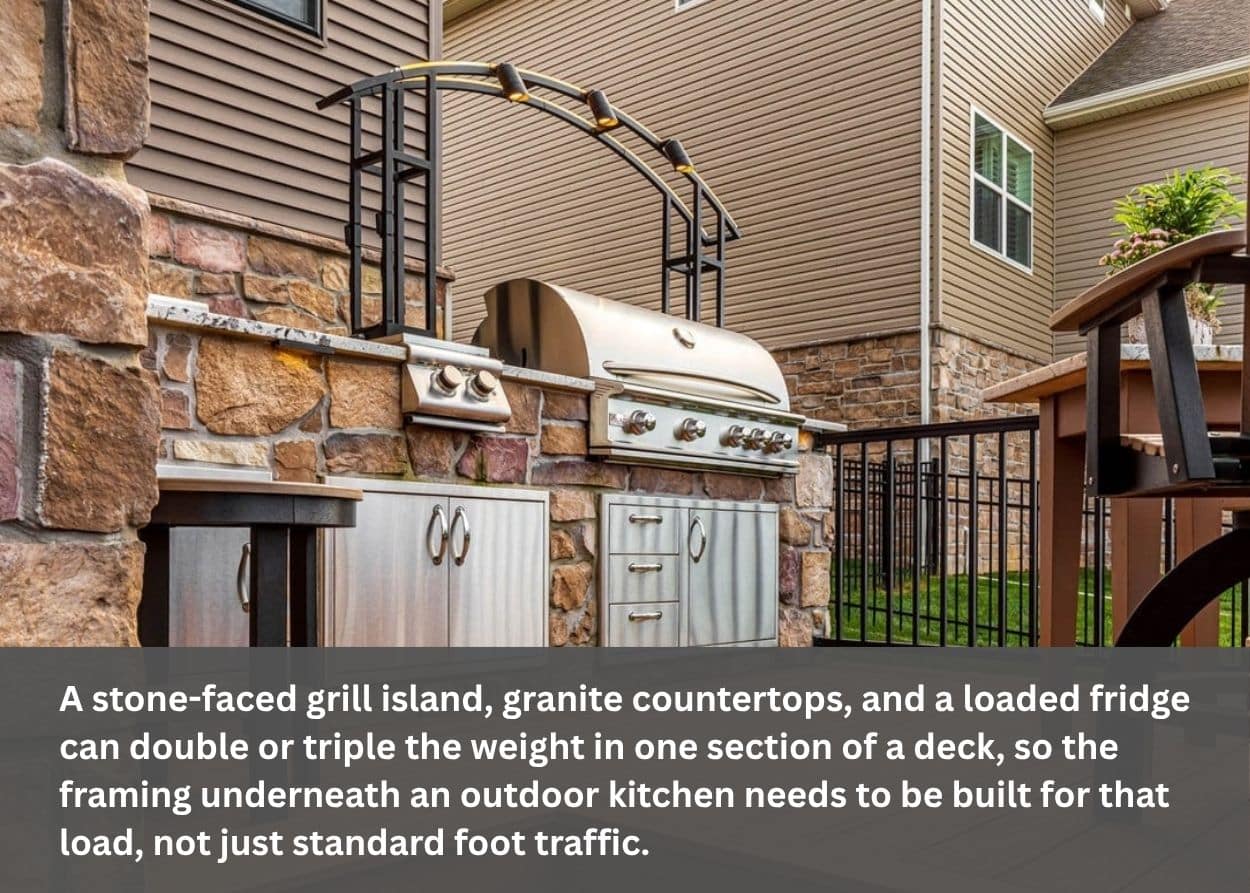
Most residential decks are built to handle a standard live load, think people walking around and furniture. Stack in a stone-faced grill island, granite countertops, and a loaded fridge, and you can double or even triple the weight sitting in that one section of the deck. That's a lot of concentrated weight asking a lot from framing that was never designed for it.
A few things we always check before building an outdoor kitchen on a deck:
- Placement. Setting the kitchen directly over beams and posts, instead of spanning between them, makes a real difference in how much reinforcement you need.
- Joist spacing. Tighter spacing under a kitchen footprint spreads the load and reduces flex.
- Decking material. Composite and PVC decking generally handle the added weight better than standard pressure-treated wood, though either can work with the right framing underneath.
- Heat protection. A fire-rated pad or stone base under anything that generates real heat protects the decking material from scorching or warping over time.
None of this is meant to talk you out of a deck-based outdoor kitchen. Plenty of them work great. It just means you have to plan the layout around the kitchen from the start, not squeeze it in after the deck's already built.
Build the Kitchen That Actually Fits Your Backyard
Here's the truth: the best outdoor kitchen isn't the one with the longest appliance list. It's the one that matches how you actually use your backyard.
Weeknight dinners with the family? Start with the essentials and add a fridge. Hosting friends most weekends? That's when the side burner, the pizza oven, and the drink station start to make sense.
Either way, the appliances are only half the equation. Getting the permits right, keeping the electrical safe, and building a deck strong enough to carry it all ensure you enjoy the space for years instead of dealing with a headache down the road.
That's the part we handle every day. When you work with Keystone Outdoor Living, you get a free 3D rendering of your actual backyard, a design built around the way you live in it, and a build that accounts for the weight, the wiring, and the paperwork before the first board goes down.
Schedule an estimate with us, and let's figure out what your outdoor kitchen actually needs.