

Planning an outdoor living space in Pennsylvania requires careful consideration of climate, terrain, materials, and local regulations. This step-by-step guide explains exactly how to design and build a functional, durable, and attractive outdoor space that works in PA’s unique conditions.
Whether you are building a patio, deck, outdoor kitchen, or full backyard retreat, this guide will walk you through the entire process.
What Is an Outdoor Living Project?
An outdoor living project is the design and construction of usable outdoor space for relaxing, entertaining, or cooking. Common features include:
- Decks
- Patios
- Porches
- Pools
- Spas
- Fire pits and fireplaces
- Outdoor kitchens and grills
- Pergolas
- Seating and dining areas
In Pennsylvania, these spaces must be built to withstand freeze-thaw cycles, snow, and seasonal temperature changes.
Step 1: Define Your Outdoor Living Goals
Start by identifying how you want to use your space.
Ask:
- Do you want to entertain guests or create a quiet retreat?
- Will you need dining space, lounging space, or both?
- Are features like a fire pit or outdoor kitchen important?
Clear goals help guide design, budget, and layout decisions.
Step 2: Set a Budget for Your Project
Outdoor living costs in Pennsylvania vary based on size, materials, and complexity.
Typical cost ranges:
- Deck construction: $15,000 to $50,000+
- Patios: $10,000 to $50,000+
- Porches: $30,000 to $75,000+
- Pools: $50,000+
- Outdoor kitchen: $10,000 to $40,000+
Include additional costs for:
- Permits
- Excavation and drainage
- Landscaping
- Lighting and furniture
Add a 10 to 20 percent contingency to cover unexpected issues.
Step 3: Evaluate Your Yard and Site Conditions
Pennsylvania properties often include slopes, clay soil, and drainage challenges.
Assess:
- Grading and elevation changes
- Sun and shade exposure
- Water runoff and drainage patterns
- Tree roots and existing landscaping
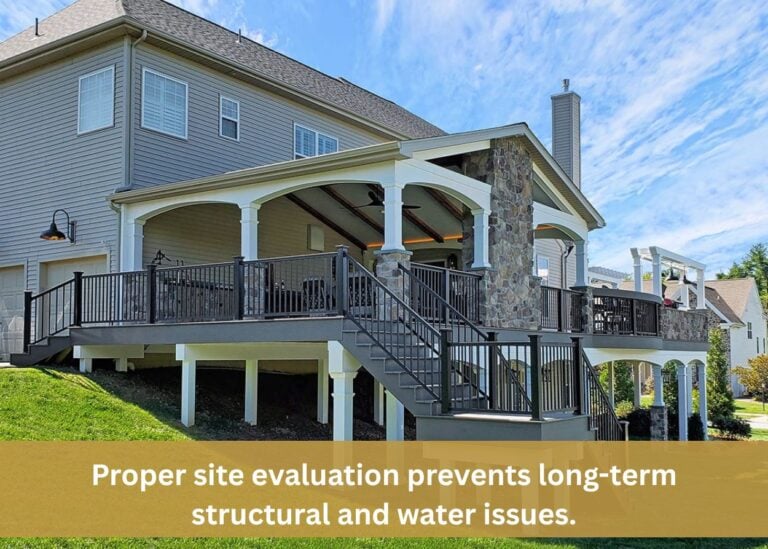
Proper site evaluation prevents long-term structural and water issues.
Step 4: Check Local Pennsylvania Regulations and Permits
Before building, confirm local requirements.
You may need permits for:
- Deck construction
- Roof structures like pavilions
- Gas lines for fire pits or kitchens
Also review:
- Property line setback rules
- HOA guidelines if applicable
- Stormwater management requirements
Contact your township or borough office for accurate information.
Step 5: Choose Materials That Withstand Pennsylvania Weather
PA’s climate includes freezing winters, humid summers, and heavy rainfall. Material choice is critical.
Best options:
- Concrete pavers (flexible and resistant to cracking)
- Composite decking (low maintenance and moisture resistant)
- Natural stone (durable and long-lasting)
Avoid materials that cannot handle repeated freeze-thaw cycles.
Step 6: Design a Functional Outdoor Layout
Divide your space into clear zones.
Common layout zones:
- Dining area near the house
- Lounge or seating area
- Fire feature or focal point
- Walkways connecting spaces
A well-planned layout improves usability and flow.
Step 7: Plan Utilities Before Construction
Installing utilities during the build phase saves time and money.
Plan for:
- Electrical outlets for lighting and appliances
- Gas lines for grills or fire features
- Water lines for outdoor kitchens or irrigation
- Drainage systems to manage runoff
Retrofitting utilities later is significantly more expensive.
Step 8: Design for Year-Round Use in Pennsylvania
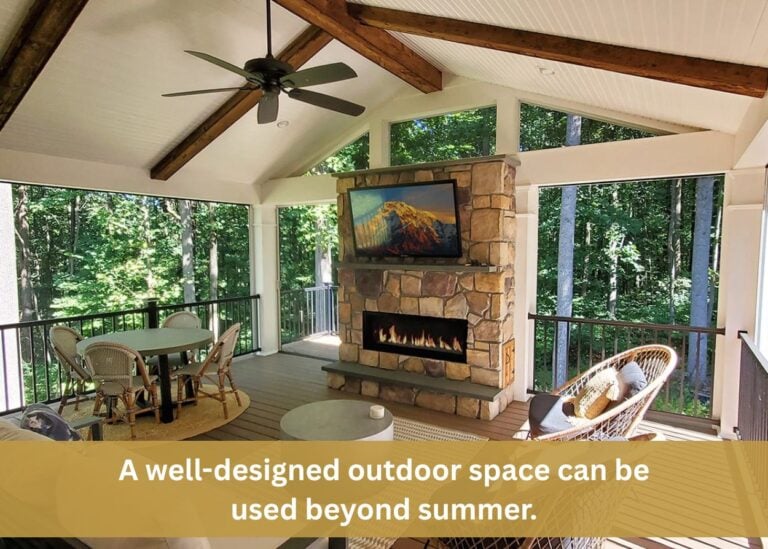
A well-designed outdoor space can be used beyond summer.
To extend usability:
- Install a fire pit or outdoor fireplace
- Add a covered structure like a pergola or pavilion
- Use outdoor heaters
- Include lighting for shorter daylight hours
This allows use from early spring through late fall.
Step 9: Decide Between DIY or Hiring a Contractor
Some projects are suitable for DIY, while others require professionals.
DIY projects:
- Basic patios
- Landscaping and planting
- Furniture setup
Hire a contractor for:
- Deck construction
- Electrical and gas work
- Major grading or drainage
- Complex designs
Always request multiple quotes and review past work.
Step 10: Build Your Project in Phases
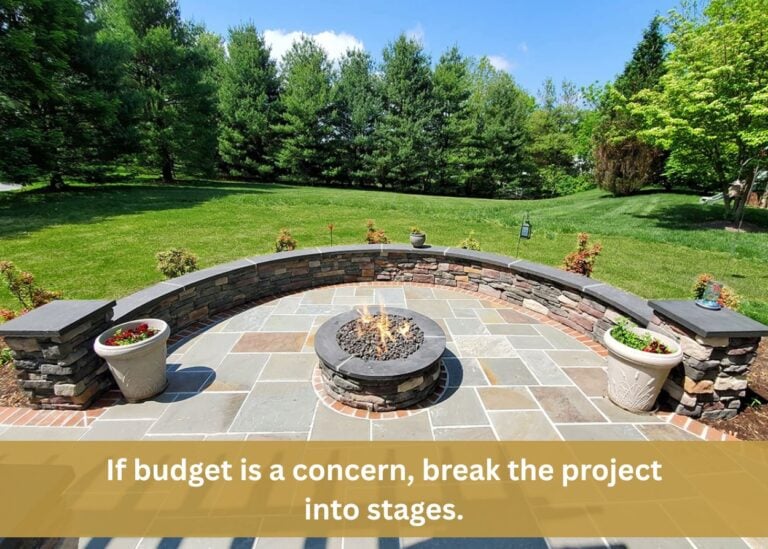
If budget is a concern, break the project into stages.
Example phased plan:
- Install patio or deck
- Add a porch
- Add seating and landscaping
- Build fire pit or kitchen
- Add lighting and structures
- Build a pool & patio surround
Phasing allows flexibility and better financial planning.
Step 11: Plan Your Timeline
Outdoor construction from Keystone Outdoor Living is year-round. However, there are still best practices for getting on our schedule so you can enjoy your space in the spring and summer.
Best time to build:
- Late spring through early fall
Important tip:
- Contractors often book months in advance
Start planning in winter or early spring to secure your timeline.
Step 12: Add Finishing Touches
Complete your space with comfort and style.
Consider:
- Weather-resistant outdoor furniture
- Rugs and cushions
- String lights or landscape lighting
- Planters and greenery
These elements make the space inviting and functional.
Common Mistakes to Avoid
- Ignoring drainage issues
- Skipping permits or zoning rules
- Underestimating costs
- Poor layout with no defined zones
- Choosing materials not suited for PA weather
Avoiding these mistakes will save time and money.