

Planning an outdoor living project in Pennsylvania requires more than just design ideas. Homeowners must consider climate, materials, drainage, permits, and long-term usability.
This complete checklist walks you through every step of planning a patio, deck, outdoor kitchen, or backyard living space in PA so nothing gets missed.
Outdoor Living Planning Checklist (Quick Overview)
Use this quick checklist before starting your project:
- Define how you will use the space
- Set a realistic budget with contingency
- Evaluate your yard conditions and drainage
- Check local permits and zoning requirements
- Choose weather-resistant materials
- Design a functional layout with zones
- Plan utilities (electric, gas, water)
- Consider year-round usability
- Decide DIY vs hiring a contractor
- Plan your project timeline
- Add finishing touches and furniture
Each step is explained in detail below.
1. Define Your Outdoor Living Goals
Before designing anything, clarify how the space will be used.
Checklist:
- Identify primary use (entertaining, relaxing, cooking)
- Estimate how many people the space should accommodate
- Decide on key features (deck, patio, porch, pool, spa)
- Determine whether you want covered or open space
Clear goals prevent costly design changes later.
2. Set Your Budget
Outdoor projects in Pennsylvania vary widely in cost depending on size and materials.
Checklist:
- Establish total budget range
- Allocate funds for construction, materials, and labor
- Include permits and site preparation
- Budget for furniture and lighting
- Add 10 to 20 percent for unexpected costs
- If using financing, think about your monthly payment and what you can afford
3. Evaluate Your Property
Pennsylvania yards often include slopes, clay soil, and drainage challenges.
Checklist:
- Check grading and elevation
- Identify low spots where water collects
- Evaluate sun and shade patterns
- Inspect existing trees and root systems
- Consider access for equipment and materials
Proper evaluation helps avoid structural and water issues.
4. Verify Local Regulations and Permits
Most municipalities in Pennsylvania require permits for certain outdoor structures.
Checklist:
- Confirm if permits are required for decks or structures
- Check setback requirements from property lines
- Review HOA guidelines if applicable
- Understand stormwater management rules
Skipping this step can delay or stop your project.
5. Select Materials for Pennsylvania Weather
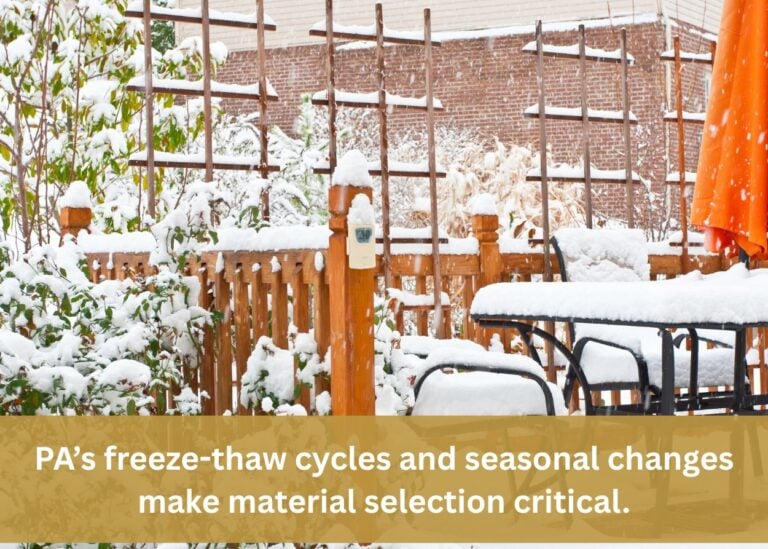
PA’s freeze-thaw cycles and seasonal changes make material selection critical.
Checklist:
- Choose materials that resist cracking and moisture
- Compare maintenance requirements
- Consider long-term durability
- Match materials to your budget
Recommended materials:
- Concrete pavers
- Composite decking
- Natural stone
- Pressure-treated wood or cedar
6. Design a Functional Layout
A well-planned layout improves usability and comfort.
Checklist:
- Divide space into zones (dining, seating, cooking)
- Ensure easy movement between areas
- Place dining close to the house
- Create a focal point such as a fire pit
- Plan walkways and transitions
Avoid overcrowding or poor flow.
7. Plan Utilities in Advance
Utilities should be installed during construction, not after.
Checklist:
- Plan electrical outlets for lighting and appliances
- Install gas lines for grills or fire features
- Add water access if needed
- Design proper drainage systems
Planning utilities early saves significant cost later.
8. Plan for Year-Round Use
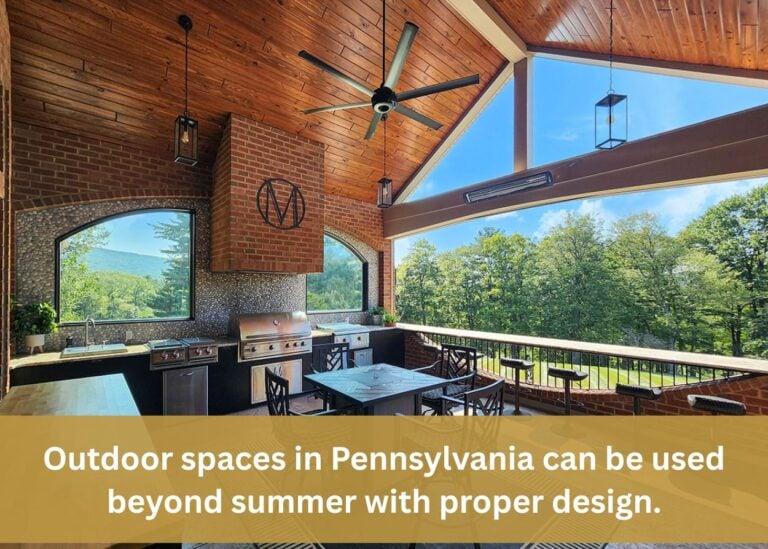
Outdoor spaces in Pennsylvania can be used beyond summer with proper design.
Checklist:
- Include a fire feature for cooler months
- Add a pergola or covered structure
- Consider outdoor heaters
- Install lighting for shorter days
This extends usability from spring through fall.
9. Decide DIY or Hire a Contractor
Some projects can be done yourself, while others require professionals.
Checklist:
- Evaluate your skill level and available time
- Identify tasks requiring permits or specialized work
- Get multiple contractor quotes
- Review contractor references and past projects
Professional help is recommended for complex builds.
10. Plan Your Project Timeline
Timing is important due to Pennsylvania’s seasonal weather.
Checklist:
- Start planning in winter or early spring
- Schedule construction for late spring through early fall
- Account for contractor availability
- Build in buffer time for delays
Early planning helps secure your preferred timeline.
11. Build in Phases if Needed
Breaking the project into phases can make it more manageable.
Checklist:
- Prioritize core structure (patio or deck)
- Add features like fire pits or kitchens later
- Plan for future additions in initial design
- Adjust based on how you use the space
Phasing helps control costs and improve flexibility.
12. Add Final Touches
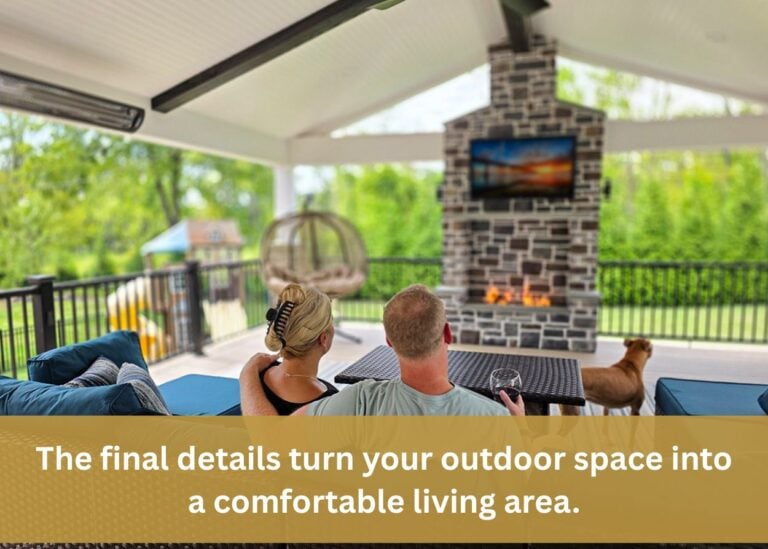
The final details turn your outdoor space into a comfortable living area.
Checklist:
- Choose weather-resistant furniture
- Add outdoor rugs and cushions
- Install lighting (string lights, landscape lighting)
- Use plants and greenery for visual appeal
These elements improve both function and aesthetics.
Common Mistakes to Avoid
- Ignoring drainage issues
- Skipping permits or zoning requirements
- Underestimating total costs
- Poor layout planning
- Choosing materials not suited for PA climate
Avoiding these mistakes can prevent costly repairs.
Frequently Asked Questions
What is the first step in planning an outdoor living space?
The first step is defining how you want to use the space, including features, layout, and capacity.
How much should I budget for an outdoor project in Pennsylvania?
Most projects range from $10,000 to $500,000 or more, depending on size and complexity.
What materials work best in Pennsylvania weather?
Concrete pavers, composite decking, and natural stone perform well in freeze-thaw conditions.
Do I need permits for outdoor projects in PA?
Yes, many structures such as decks and covered areas require permits. Check with your local municipality.
Final Checklist for PA Homeowners
Before starting construction, confirm:
- Goals are clearly defined
- Budget is set with contingency
- Property has been evaluated
- Permits and regulations are understood
- Materials are selected for durability
- Layout is finalized
- Utilities are planned
- Timeline is scheduled
Conclusion
This outdoor living planning checklist gives Pennsylvania homeowners a complete roadmap from idea to construction. By following each step, you can avoid common mistakes, stay on budget, and create a space designed for long-term use.