

10 Wood-Burning Fire Pit FAQs, Answered by Builders With 40+ Years of Experience
It's a Friday night in October, and the last of the s'mores are gone, but nobody wants to leave. Someone tosses on another log, one more chair gets pulled up, and thirty minutes later everyone's still sitting around the fire pit. Half-finished conversations trail off and pick back up again throughout the evening. This isn't a one-time thing. This is just what Fridays look like now.
That's the backyard you're picturing when you start looking into a wood-burning fire pit. If you've already started researching, you're doing it right. You're asking good questions: What size fits your space? What should it be built from? Roughly what is it going to cost you?
But those aren’t the only questions that matter.
The questions that actually cause problems later are exactly the kind of thing we walk homeowners through before the first shovel goes in the ground. Questions like: How close is too close to your home? Is my firewood doing more harm than good? After more than 40 years of building these, we've learned the best time to ask a question is before you're already living with the answer, not after.
Here's where we'd start if we were sitting down with you today.
Table of Contents
Wood vs. Gas Fire Pits
Choosing Fire Pit Size
Fire Pit Clearance
Fire Pits Near Decks
Pennsylvania Fire Pit Permits
Best Firewood to Burn
Fire Pits During Bans
Kids and Pet Safety
Cleaning Your Fire Pit
Fire Pit Lifespan
TL;DR - 10 Wood-Burning Fire Pit FAQs
No time to read? Here’s a summary:
- Placement & Clearances: Maintain at least 10 feet of distance from houses or structures, avoid direct placement on decks, and verify local Pennsylvania township permitting or burn ban rules before lighting.
- Sizing Right: Choose a 30 to 36-inch pit for small groups (2–3 people) or a 40 to 48-inch pit for larger gatherings to ensure comfortable seating and heat distribution.
- Firewood Selection: Burn seasoned hardwoods like oak, maple, or hickory with under 20% moisture content, stored off the ground to prevent dirty, smoky fires.
- Safety & Maintenance: Keep kids and pets 3 to 10 feet away, clear cool ashes into a metal container, and use a cover to protect materials from rust and weather damage.
- Professional Longevity: A professionally designed stone or masonry fire pit built with proper drainage and durable materials will outlast big-box DIY kits by many years.
1. What makes a wood-burning fire pit different from gas or propane?
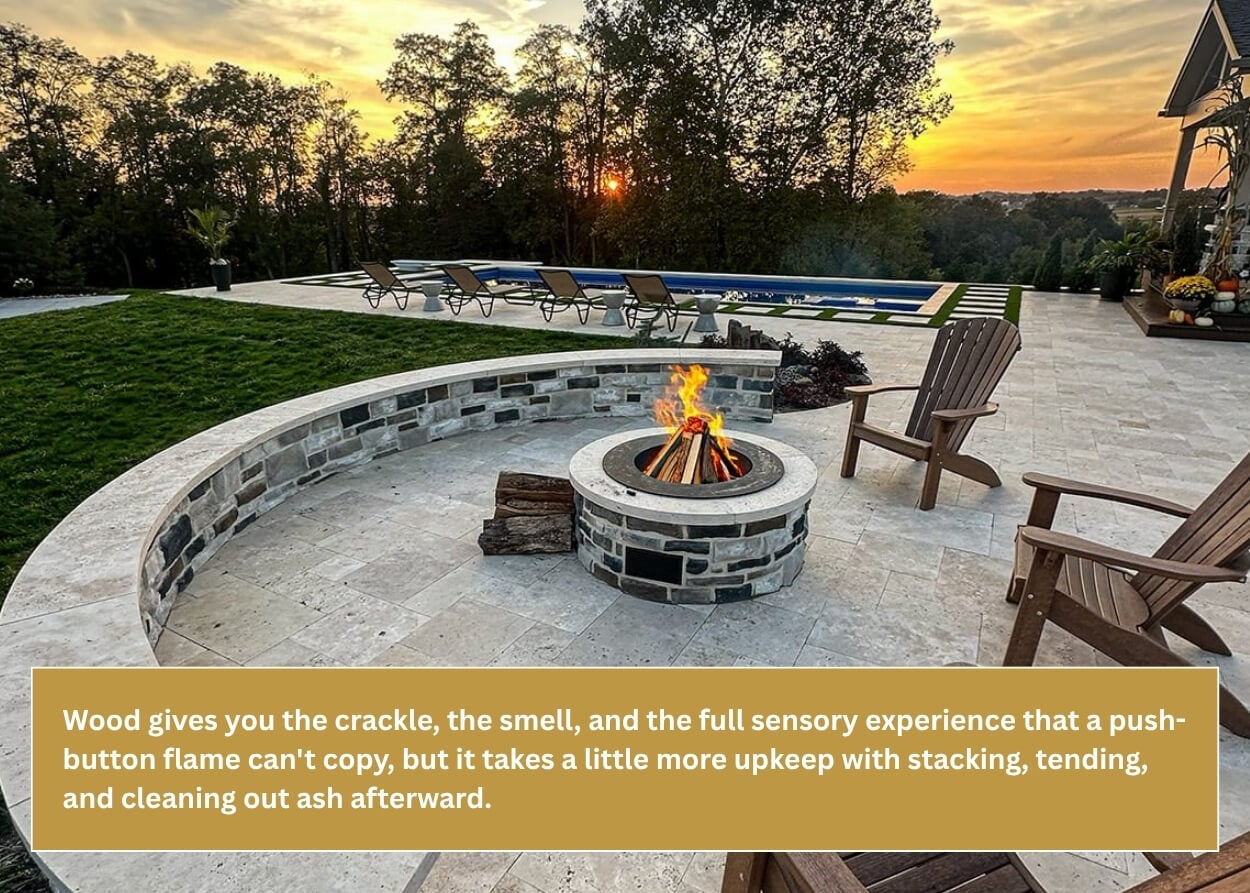
Real wood, real flame, no gas line to run. That's the short version. Wood gives you the crackle, the smell, and the whole sensory experience that a push-button flame can't fully copy. The tradeoff is a little more upkeep: stacking wood, tending the fire, cleaning out ash afterward. We've covered the full rundown on fuel types, sizes, and materials different types of fire pits use in our blog. This post assumes you've already got your heart set on wood and picks it up from there.
2. How big should my fire pit be?
It depends on how you'll actually use it. For a small patio meant for two or three people, a compact pit in the 30 to 36 inch range is usually plenty. If you're hosting bigger groups regularly, 40 to 48 inches gives people room to sit around it comfortably without crowding the flame. Bigger isn't always better here. An oversized fire pit eats up patio space and throws more heat than most seating arrangements can comfortably handle. We size these to fit your actual patio layout during the design phase, not the other way around.
3. How far does it need to be from my house, deck, or fence?
As a baseline, plan on at least 10 feet of open space between your fire pit and your house or any other structure, per State Farm's fire safety guidance. That's a floor, not a target. Some Pennsylvania townships require quite a bit more. Give yourself extra room if you're near fences, sheds, or low-hanging branches.
4. Can I build one on or near my deck?
Maybe, if you do it carefully, but usually not directly on it. Composite and wood decking can scorch, warp, or discolor from radiant heat, even if the flame itself never touches the boards. If you want a fire pit ambiance right off your deck, the safer move is a paver or stone patio built at grade next to it, with real clearance between the two. Since we build both decks and fire features, this is one of the first things we plan for together, so your new fire pit doesn't put your existing deck at risk.
5. Do I need a permit for a wood-burning fire pit in Pennsylvania?
Usually not for the fire pit itself, though rules vary by township. We covered Pennsylvania's clearance rules and East Earl Township's specific requirements in detail in Different Types of Fire Pits, including when a permit comes into play. It's worth a quick read before you settle on a location. Moving a finished fire pit later is much more work than checking permitting first.
6. What's the best firewood to burn?
Seasoned hardwood, dried for at least six months and under 20 percent moisture content, according to the EPA's Burn Wise program. Oak, maple, and hickory are common and reliable choices around here. Skip anything green or freshly cut. Wet wood burns dirtier, throws more smoke, and doesn't perform as well once it's actually lit. Store your wood off the ground with only the top covered, so it can dry out instead of trapping moisture underneath.
7. Can I still use my fire pit during a burn ban?
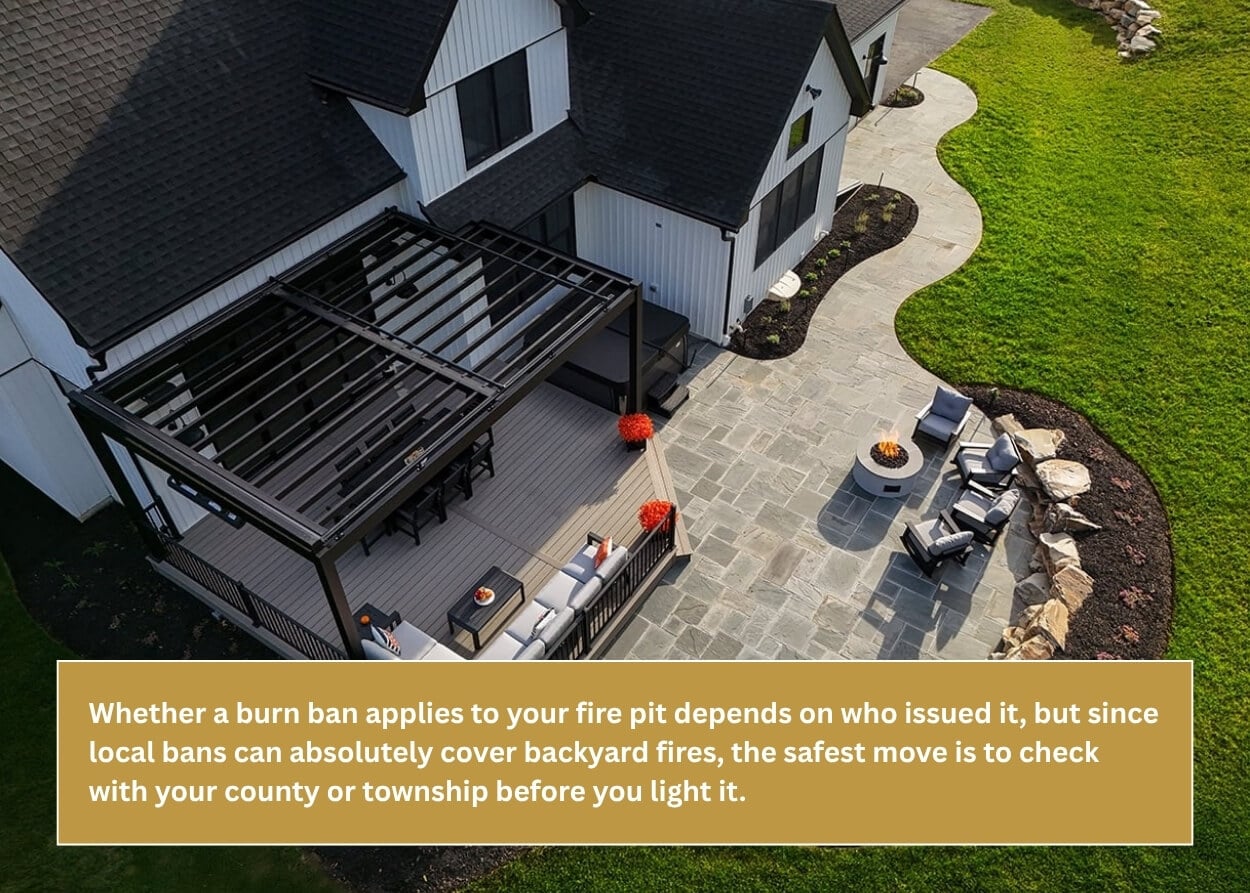
It depends on who issued the ban and why. Pennsylvania's Department of Conservation and Natural Resources mostly manages burn restrictions for state parks and forests. Still, the same dry conditions that trigger those bans often lead counties and townships to issue their own local burn bans, and those can absolutely apply to a backyard fire pit. DCNR's own guidance tells residents to check with their county or township before burning, which is good advice any time conditions have been dry. When in doubt, call before you light it.
8. Is a wood-burning fire pit safe for kids and pets?
Yes, with a few basics in place. Keep kids and pets at least 3 to 10 feet back from the flame, and never leave a lit fire pit unsupervised, even for a few minutes, according to fire safety guidance. A spark screen helps contain embers on breezy nights, and it's worth keeping a hose or bucket of water within reach, not because you're expecting trouble, but because it's a five-second habit that matters the one time you need it.
9. How do I clean and maintain a wood-burning fire pit?
Let the ashes cool completely, ideally overnight, before scooping them into a metal container. Fire pits can stay hot well after the flames are out, so don't rush this step. Beyond that, check stone or masonry fire pits each spring for cracking or shifting, and inspect steel or cast iron features for rust. A cover during the off-season keeps moisture and debris out and adds years to whatever you built.
10. How long will a professionally built fire pit last?
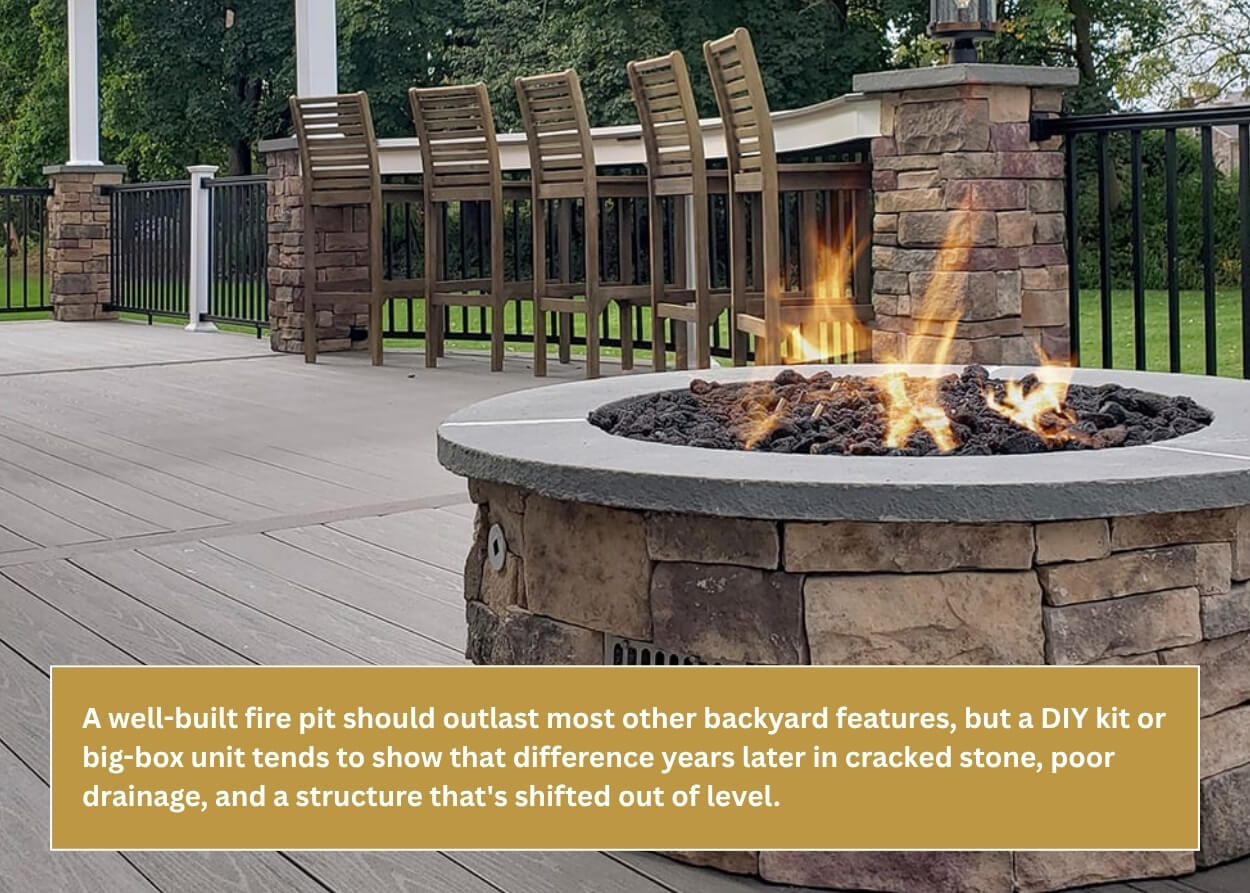
A well-built fire pit, with the right materials and proper drainage underneath, should easily outlast most other backyard features. That's part of why every fire pit and fireplace project we build comes with a Lifetime Workmanship Warranty. A DIY kit or a big-box fire pit might save you money upfront, but the difference tends to show up years later: cracked stone, poor drainage, a structure that's shifted out of level.
Ready to Build the Backyard You Keep Picturing?
Every fire pit we build starts the same way: a free consultation and a 3D rendering of your actual backyard, so you can see it before anything gets built. That's true whether you already know exactly what you want or you're still working through the list above.
You already know the backyard you're going for. Friends who stay past dark. A tradition around the fire pit that happens in the fall without anyone planning it. Getting there isn't about finding every answer on your own. It's about building with someone who's already run into the questions you haven't thought of yet.
We've been doing this for more than 40 years. Schedule your estimate with Keystone Custom Decks today, and let's figure out where yours goes.